
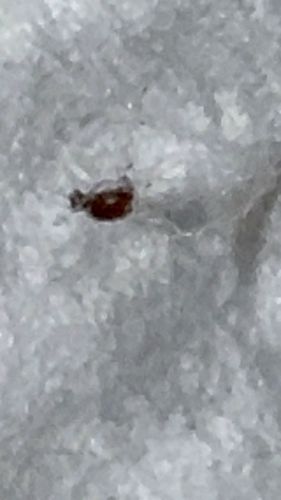
Clover Mite
Bryobia praetiosa
- Order & Family
- Order: Trombidiformes; Family: Tetranychidae
- Size
- Typically smaller than a pinhead, approximately 0.75 mm in length.
Natural Habitat
Often found outdoors on lawns, clover, and other plants. They frequently invade homes in large numbers during spring and autumn, congregating around windowsills, cracks, and sunny exterior walls.
Diet & Feeding
Herbivores that feed on the sap of various plants, including clover, grasses, and ornamental flowers. They do not bite humans or pets.
Behavior Patterns
They are known for mass migrations into homes when outdoor vegetation dries up or temperatures change. They are active during cooler weather in spring and fall and go dormant during the hottest parts of summer and coldest parts of winter. When crushed, they leave a characteristic red stain.
Risks & Benefits
Risks: They are a nuisance pest rather than a health threat. They do not bite, sting, or transmit diseases, but they can leave stubborn red stains on fabrics, walls, and carpets if crushed. Benefits: They play a minor role in the soil ecosystem but are generally considered pests when near human habitation.