Human itch mite (Scabies)
Scientific Name: Sarcoptes scabiei var. hominis
Order & Family: Order: Sarcoptiformes; Family: Sarcoptidae
Size: Adult females: 0.30 to 0.45 mm long; males are about half that size. They are generally too small to be seen by the naked eye.
Natural Habitat
Humans are the primary host; the mite lives on and burrows within the upper layer of human skin. Children, the elderly, and immunocompromised individuals are more vulnerable.
Diet & Feeding
Scabies mites feed on dissolved skin cells and tissue fluids of their human hosts.
Behavior Patterns
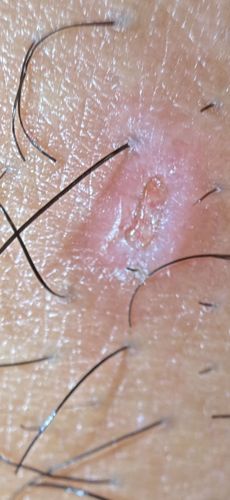
The female mite burrows into the skin (typically in finger webs, wrists, and elbows) to lay eggs. This creates a small, often wavy, raised line. The symptoms—intense itching and a pimple-like rash—are an allergic reaction to the mites, their eggs, and their waste.
Risks & Benefits
Risks: Highly contagious through direct skin-to-skin contact or, less commonly, infested clothing/bedding. Untreated infestations can lead to secondary bacterial skin infections like impetigo or cellulitis due to scratching. There are no known benefits to humans or the ecosystem.
Identified on: 1/11/2026