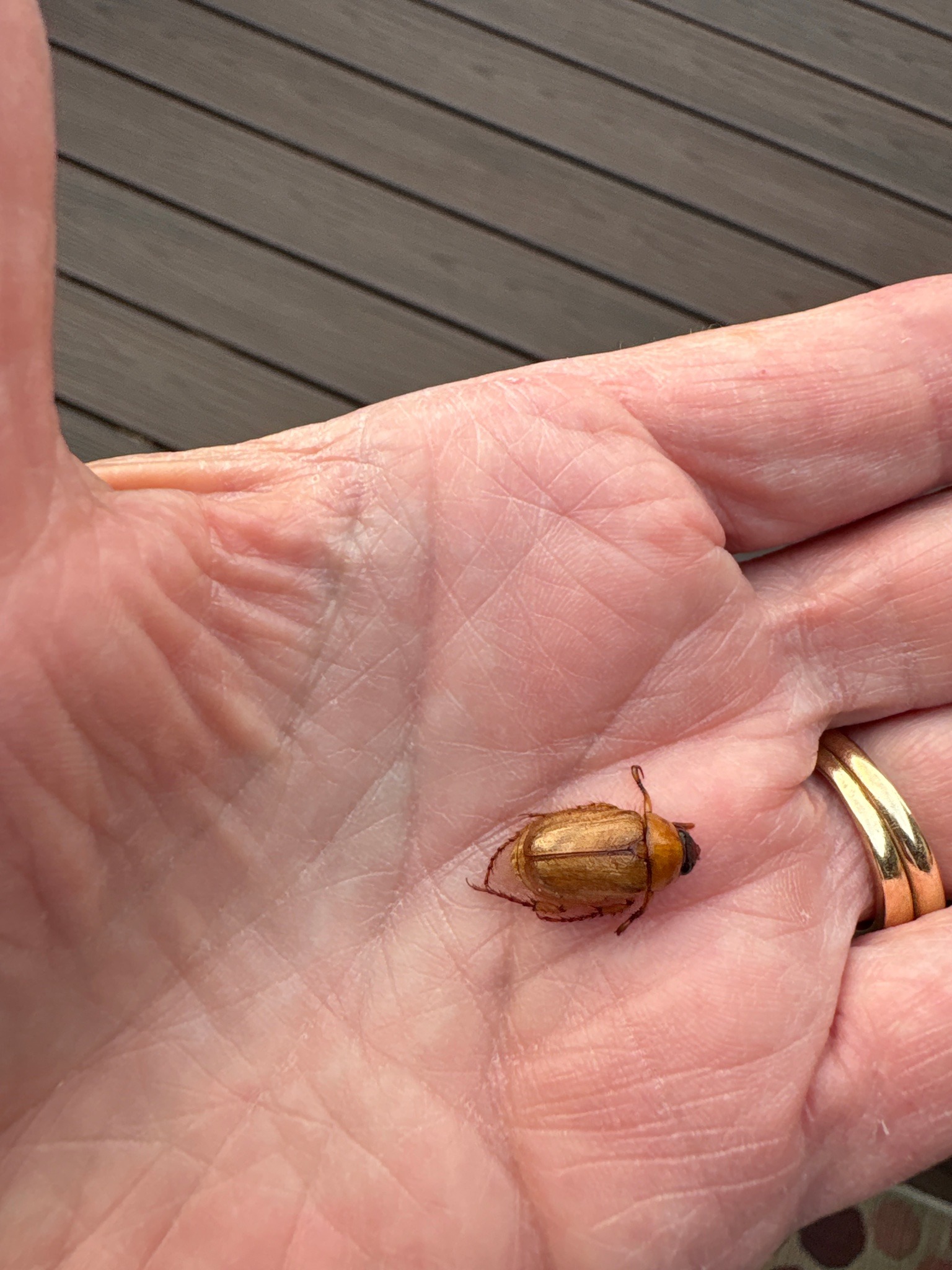
European Chafer
Scientific Name: Amphimallon majale
Order & Family: Order: Coleoptera; Family: Scarabaeidae
Size: 12 to 14 mm in length
Natural Habitat
Found in temperate regions, frequently in suburban lawns, parks, golf courses, and agricultural pastures with moist soil.
Diet & Feeding
Larvae (grubs) feed on the roots of grasses and turf; adults feed very little if at all, though they may nibble on the foliage of certain trees and shrubs.
Behavior Patterns
Adults are nocturnal and emerge in large swarms at dusk during late June and July to mate, often congregating around trees. They have a one-year life cycle with most of that time spent as subterranean larvae.
Risks & Benefits
They are considered a significant lawn pest because the larvae destroy turf roots, leading to dead patches; they also attract predators like skunks and birds that dig up lawns. They do not pose a direct physical risk to humans.
Identified on: 6/19/2026