
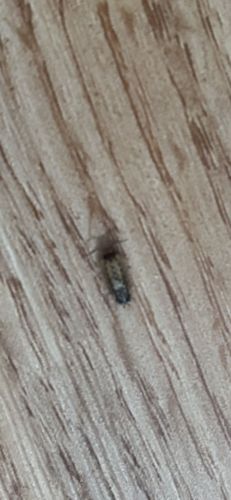
Community identification
Non-biting midge
Chironomus plumosus (complex)
- Order & Family
- Order: Diptera; Family: Chironomidae
- Size
- 1 mm to 10 mm (0.04 to 0.4 inches)
Natural Habitat
Found near freshwater bodies like lakes, ponds, and slow-moving rivers; adults often rest on walls, screens, or vegetation near water.
Diet & Feeding
Adults typically do not feed or consume only liquid sugar/nectar. Larvae (bloodworms) eat organic debris, algae, and microorganisms.
Behavior Patterns
Adults often form large mating swarms in the evening. They are highly attracted to light and are often confused with mosquitoes due to their appearance and resting posture.
Risks & Benefits
They do not bite or transmit disease. They are beneficial to the ecosystem as they are a primary food source for fish, birds, and bats. Large numbers can be a nuisance around homes.