
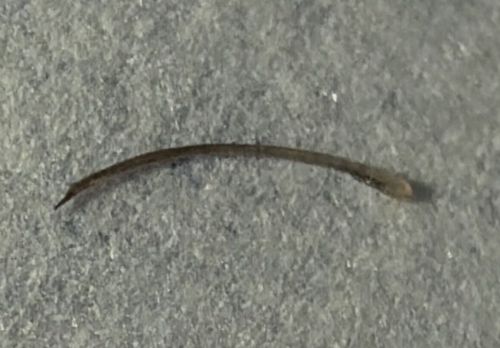
Horsehair Worm
Gordius robustus (and other species in the phylum Nematomorpha)
- Order & Family
- Order Gordioidea, Family Gordiidae
- Size
- Typically 10-15 cm (4-6 inches) long, but can reach lengths of over a foot. They are extremely thin, usually 1-3 mm in diameter.
Natural Habitat
Adults are free-living in freshwater environments like puddles, streams, and troughs. They are often found on sidewalks or driveways after rain, having emerged from their insect hosts.
Diet & Feeding
Larvae are parasitic and feed on the internal fluids of insects (crickets, grasshoppers, beetles). Adults do not feed; their primary purpose is reproduction.
Behavior Patterns
They are famous for a parasitic lifecycle where larvae develop inside a host insect. The worm manipulates the host's behavior, compelling it to seek water, where the worm bursts out to reproduce. The adults are often seen writhing in tangled knots, earning them the nickname 'Gordian worms'.
Risks & Benefits
Harmless to humans, pets, and plants. They cannot parasitize mammals. They are generally considered beneficial as biological control agents because they parasitize and kill common pests like grasshoppers, cockroaches, and crickets.