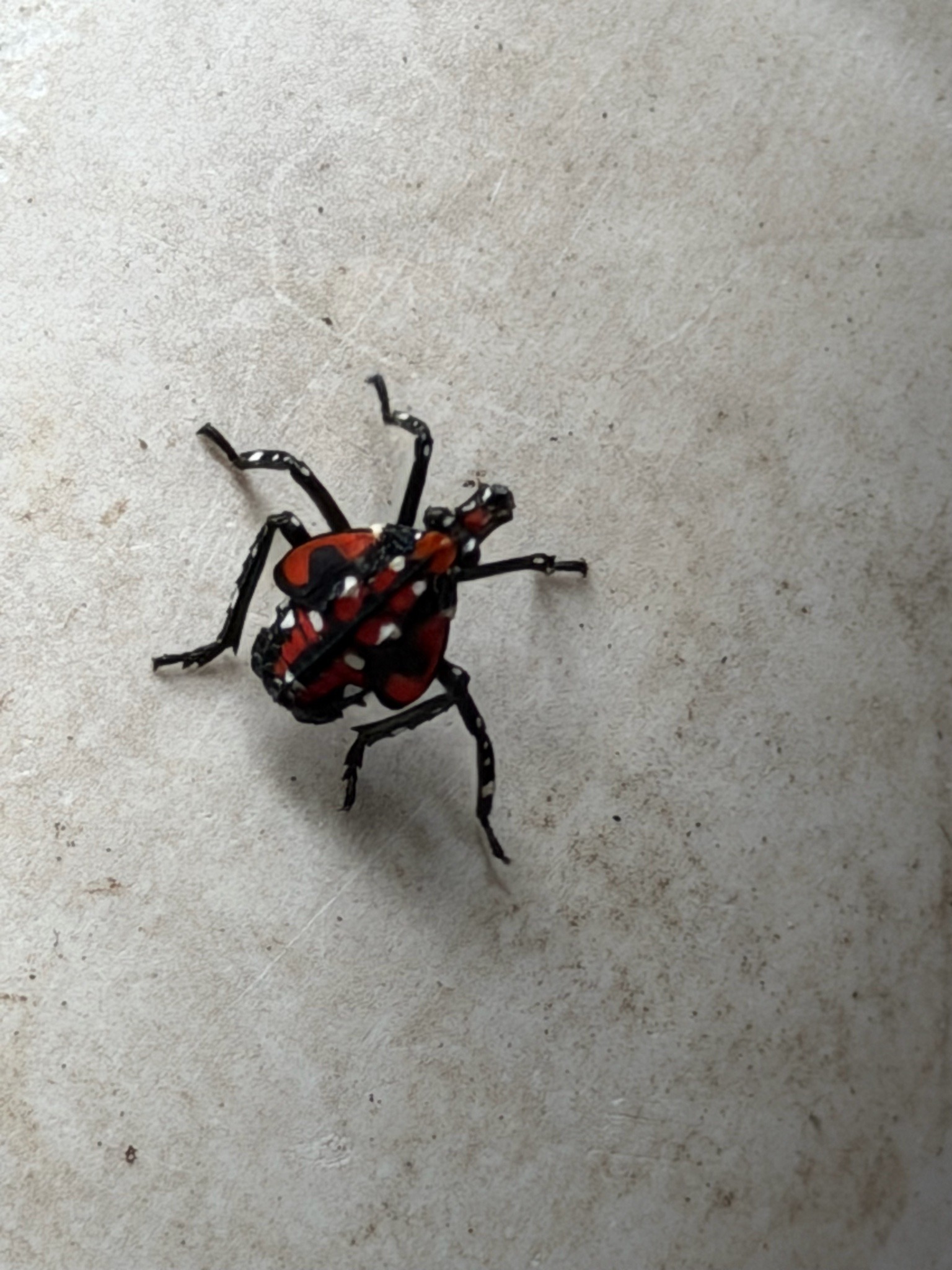
Spotted Lanternfly (Fourth-stage Nymph)
Scientific Name: Lycorma delicatula
Order & Family: Hemiptera: Fulgoridae
Size: Approximately 12 to 14 mm (0.5 inches) long as fourth-instar nymphs.
Natural Habitat
Typically found on the surfaces of a wide variety of plants, particularly the Tree-of-Heaven (Ailanthus altissima), but also on fruit trees, grapevines, and various hardwoods across Southeast Asia and North America.
Diet & Feeding
Polyphagous planthoppers that feed on phloem sap from over 70 different plant species including grapes, hops, stone fruits, and walnut trees.
Behavior Patterns
Nymphs hatch in the spring and go through four developmental stages (instars). This red, black, and white phase is the final stage before they become winged adults in late summer. They are agile jumpers and tend to congregate in large numbers to feed.
Risks & Benefits
This is a highly destructive invasive species in North America. By sucking sap, they weaken plants and excrete 'honeydew' which encourages the growth of black sooty mold. They pose a significant economic threat to the timber, orchard, and vineyard industries. They have no known benefits to the ecosystems they invade.
Identified on: 6/18/2026