
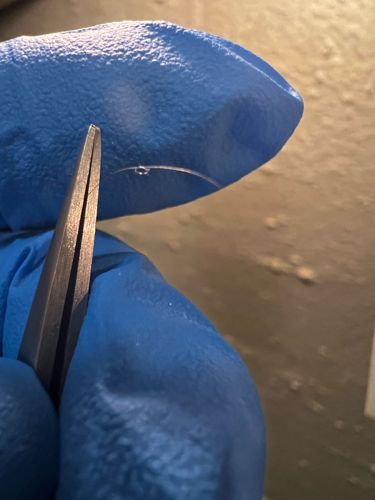
Community identification
Pinworm
Enterobius vermicularis
- Order & Family
- Order: Oxyurida, Family: Oxyuridae
- Size
- Females: 8–13 mm long; Males: 2–5 mm long. (The specimen pictured appears to be a female based on size).
Natural Habitat
The human large intestine (colon and rectum); eggs are found on perianal skin and contaminated environmental surfaces.
Diet & Feeding
Content of the human intestinal tract and potentially mucosal cells.
Behavior Patterns
At night, gravid females migrate out of the anus to deposit thousands of eggs on the surrounding skin before dying. This causes intense itching (pruritus ani). Infection occurs via ingestion of eggs.
Risks & Benefits
Risks: Causes enterobiasis, characterized by itching, disturbed sleep, and irritability. While generally not dangerous, it is highly contagious among household members. There are no known ecological benefits.