
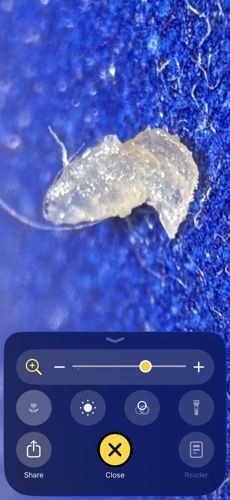
Community identification
Common House Dust Mite
Dermatophagoides pteronyssinus
- Order & Family
- Order: Sarcoptiformes, Family: Pyroglyphidae
- Size
- 0.2–0.3 mm in length (microscopic; the image provided likely shows an accumulation or debris related to their environment).
Natural Habitat
Found indoors globally, particularly within mattresses, carpets, upholstered furniture, and soft toys that trap moisture and skin cells.
Diet & Feeding
Primary diet consists of tiny flakes of discarded human and animal skin (dander) that have been partially decomposed by fungi.
Behavior Patterns
They thrive in humid environments (70-80% relative humidity) and are photophobic, meaning they tuck deep into fabrics to avoid light. They do not drink water but absorb it from the air.
Risks & Benefits
Risks: Their waste products (proteins) are major allergens, triggering asthma, eczema, and allergic rhinitis in sensitive individuals. Benefits: They play a minor role in ecosystems by breaking down organic detritus indoors.