
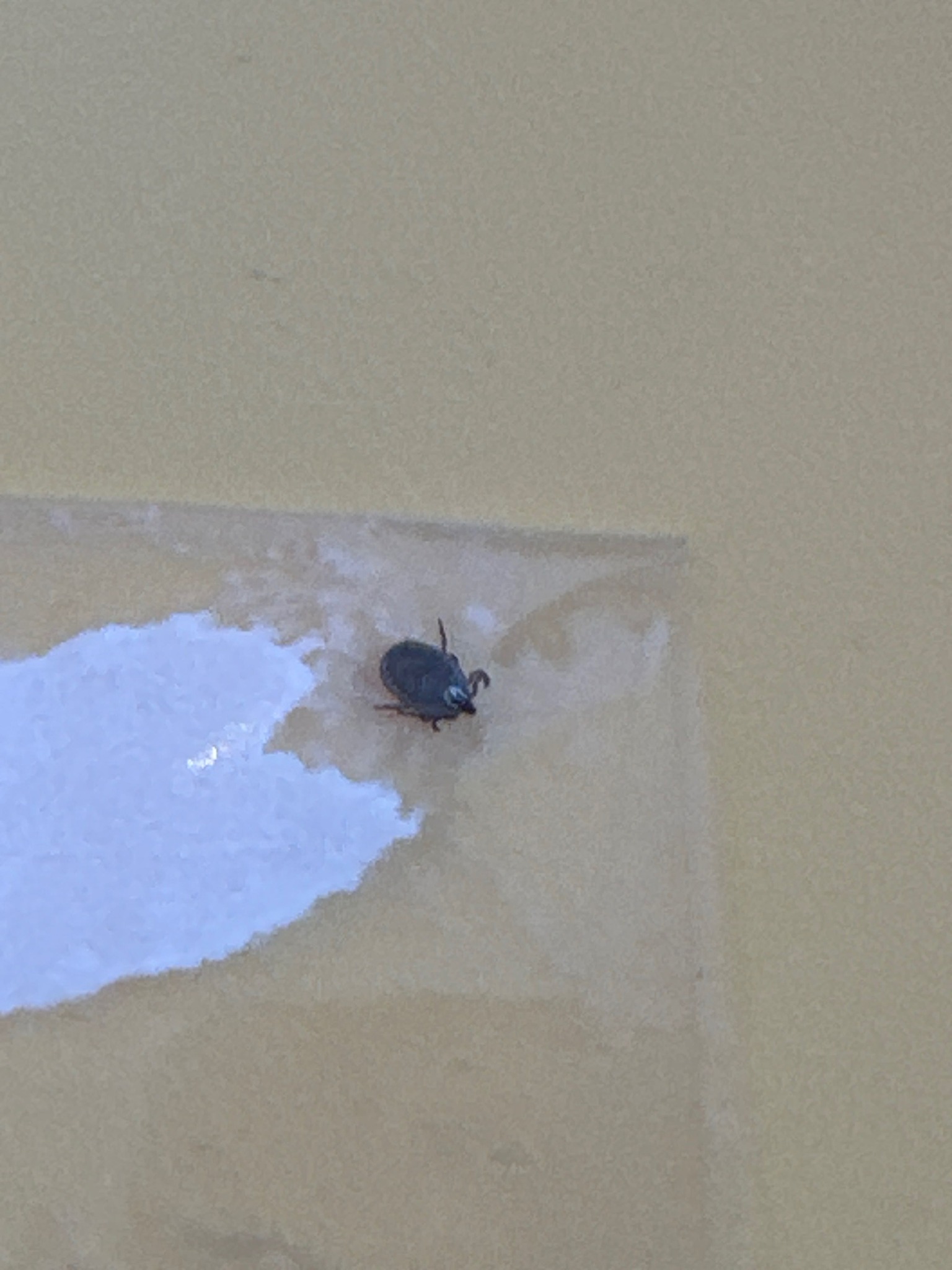
Community identification
Dog Tick
Dermacentor variabilis
- Order & Family
- Order: Ixodida, Family: Ixodidae
- Size
- 3mm to 5mm unfed; up to 15mm when fully engorged.
Natural Habitat
Grassy areas, low-lying brush, and wooded paths, common in both rural and suburban environments.
Diet & Feeding
Obligate blood-feeders; they consume the blood of mammals including dogs, deer, and humans.
Behavior Patterns
They exhibit 'questing' by climbing to the tips of vegetation and extending their front legs to latch onto passing hosts. They have a three-host life cycle (larva, nymph, adult).
Risks & Benefits
High risk as a vector for Rocky Mountain spotted fever and tularemia. They can also cause tick paralysis in pets and humans. They provide no significant benefits to the ecosystem besides serving as food for some birds and reptiles.