
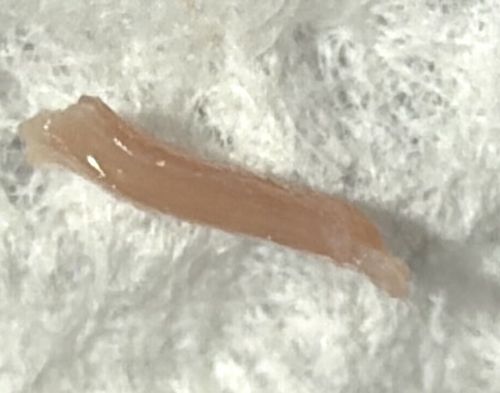
Flea Larva
Ctenocephalides felis (most common) or Ctenocephalides canis
- Order & Family
- Order: Siphonaptera, Family: Pulicidae
- Size
- Typically 2 to 5 millimeters long
Natural Habitat
Found in dark, protected areas where pets sleep or frequent, such as deep in carpet fibers, bedding, cracks in floorboards, or upholstery. They avoid light.
Diet & Feeding
Scavengers that feed on organic debris, primarily 'flea dirt' (undigested blood excreted by adult fleas), dead skin cells, and other organic matter.
Behavior Patterns
They are negatively phototactic (they move away from light). They wriggle actively and spin silken cocoons to pupate before emerging as adults. The larval stage typically lasts 5-20 days depending on temperature and humidity.
Risks & Benefits
Risk: They signal an active flea infestation. While larvae do not bite humans or pets, they mature into blood-sucking adults that cause itching, allergic reactions, and can transmit diseases (like murine typhus) or parasites (like tapeworms).