
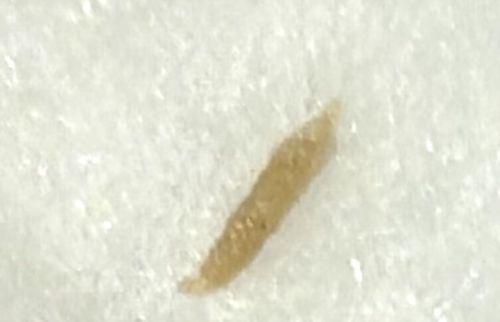
Community identification
Fruit Fly Larva (Maggot)
Drosophila melanogaster (most common example)
- Order & Family
- Order: Diptera, Family: Drosophilidae
- Size
- Usually very small, ranging from 3 to 5 millimeters in length.
Natural Habitat
Typically found in moist, decaying organic matter, especially near overripe fruit, drain slime, garbage disposals, compost bins, or damp mops.
Diet & Feeding
Feeds on yeast and bacteria growing on decaying plant material, overripe fruits, and vegetables.
Behavior Patterns
The larvae hatch from eggs laid on decaying matter and feed voraciously for several days before finding a dry place to pupate. They often wriggle actively when disturbed.
Risks & Benefits
Generally harmless to humans and don't bite or sting, but they are considered household pests and can contaminate food. In scientific research, D. melanogaster is hugely beneficial for genetics studies.