Human Itch Mite (Scabies)
Scientific Name: Sarcoptes scabiei var. hominis
Order & Family: Order: Sarcoptiformes; Family: Sarcoptidae
Size: Microscopic; females are approximately 0.30–0.45 mm long and 0.25–0.35 mm wide; males are about half that size.
Natural Habitat
Human skin, specifically the epidermis layer. These mites are obligate parasites and cannot survive for long (usually 2-3 days) away from a human host.
Diet & Feeding
The mites feed on skin cells and extracellular fluid by dissolving the skin using special secretions.
Behavior Patterns
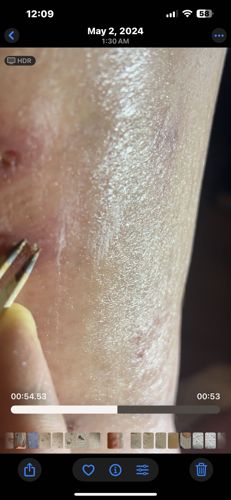
The female mite burrows into the upper layer of the skin (stratum corneum) to lay her eggs. These burrows appear as thin, wavy lines. The eggs hatch into larvae that move to the skin surface to mature and repeat the cycle.
Risks & Benefits
Risks: Causes scabies, an intensely itchy skin infestation. Can lead to secondary bacterial infections from scratching (like impetigo or cellulitis) and can cause 'crusted scabies' in immunocompromised individuals. Benefits: None; these are harmful parasites.
Identified on: 1/8/2026