
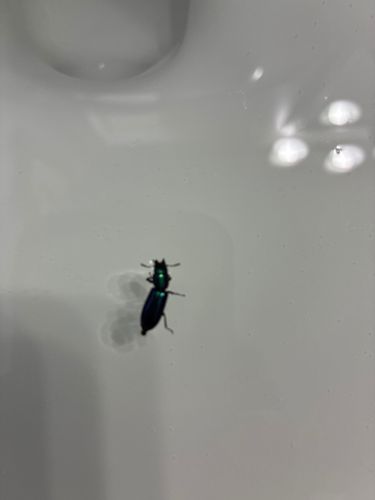
Cuckoo Wasp
Chrysis spp. (Family Chrysididae)
- Order & Family
- Order: Hymenoptera, Family: Chrysididae
- Size
- Typically 6 to 12 mm (0.24 to 0.47 inches) in length.
Natural Habitat
Widely distributed in gardens, woodlands, and urban areas near the nests of host bees and wasps; often found in sunny spots near bare soil or wooden structures.
Diet & Feeding
Adults feed on nectar and pollen. Larvae are kleptoparasites or parasitoids, eating the eggs, larvae, and food stores (pollen/nectar) of other solitary bees and wasps.
Behavior Patterns
Active during daylight; known for their brilliant metallic iridescent colors. They are 'parasitoid' in nature, sneaking into the nests of other insects to lay their eggs. They can curl into a tight ball for protection if threatened.
Risks & Benefits
They do not possess a functional stinger (it is modified into an egg-laying tube) and are harmless to humans. They benefit the ecosystem by helping to regulate the populations of other stinging insects.