
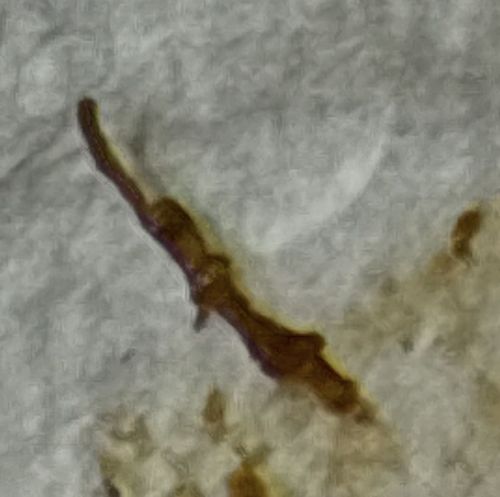
Webbing Clothes Moth Larva
Tineola business
- Order & Family
- Order: Lepidoptera, Family: Tineidae
- Size
- Typically about 10-12 mm (approx. 0.5 inches) in length when fully grown.
Natural Habitat
Found indoors in dark, undisturbed areas such as closets, drawers, and attics where keratin-based fabrics (wool, fur, silk) or natural fibers are stored.
Diet & Feeding
Feeds on animal-based fibers containing keratin, such as wool, fur, silk, leather, and feathers. They can also feed on lint, dust, and pet hair.
Behavior Patterns
The larvae spin silken tubes or tunnels ('webbing') over the material they are feeding on for protection. They prefer darkness and do not move rapidly. This is the only stage of the moth's life cycle that causes damage to fabrics.
Risks & Benefits
Risks: Significant pest that causes expensive damage to clothes, carpets, upholstery, and tapestries. They do not bite or sting humans and carry no known diseases. Benefits: None in a domestic setting; in nature, they help decompose animal detritus.