
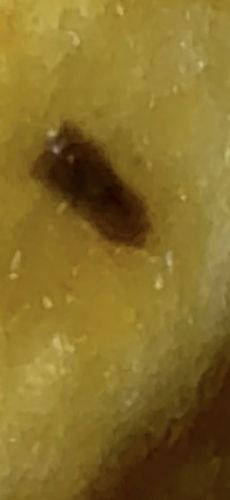
Fruit Fly Pupa
Drosophila melanogaster (most common)
- Order & Family
- Order: Diptera, Family: Drosophilidae
- Size
- Approximately 2.5–3 mm in length
Natural Habitat
Typically found on or near fermenting organic matter, especially ripe or rotting fruits (like bananas), vegetables, and garbage bins. The background of the image appears to be the peel or flesh of a banana or other fruit.
Diet & Feeding
The pupa itself does not eat; however, the larval stage feeds on yeast and bacteria associated with decomposting sugary materials (fruit).
Behavior Patterns
This is the metamorphic stage between the larva (maggot) and the adult fly. After feeding, larvae crawl to a drier spot (often the surface of the fruit or a nearby container edge) to pupate. They remain stationary in this hard, brownish casing until the adult fly emerges.
Risks & Benefits
Risks: While harmless to humans directly (they don't bite or sting), they are a nuisance pest that can spread bacteria to food. Benefits: They are a vital model organism in genetic research and serve as decomposing agents in the wild.