Bird Mite (or possibly Rodent Mite)
Scientific Name: Ornithonyssus spp. (e.g., O. sylviarum, O. bursa)
Order & Family: Order: Mesostigmata; Family: Macronyssidae
Size: Extremely small, usually less than 1 mm (approx. 0.7mm to 1mm long), often visible to the naked eye only as a moving speck.
Natural Habitat
Typically found in bird nests (pigeons, starlings, sparrows, chickens) or rodent burrows. They migrate into human dwellings when their primary host abandons the nest or dies.
Diet & Feeding
Hematophagous (blood-feeding). They primarily feed on the blood of birds or rodents but will bite humans and pets opportunistically if their natural host is absent.
Behavior Patterns
These mites are active and mobile. They often enter homes through cracks, windows, or vents near nesting sites. They are most active at night or in warm conditions. They cannot survive indefinitely on human blood (they need their avian or rodent host to reproduce).
Risks & Benefits
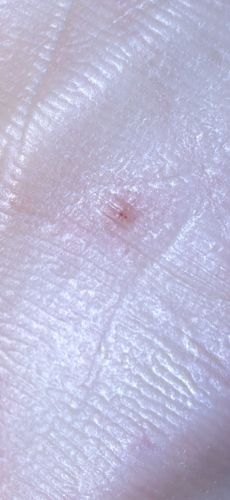
Risks: Their bites cause intense itching, irritation, and rashes (papular dermatitis) on humans. While annoying and uncomfortable, they do not typically transmit diseases to humans. Benefits: None to humans; they are parasitic pests.
Identified on: 2/22/2026