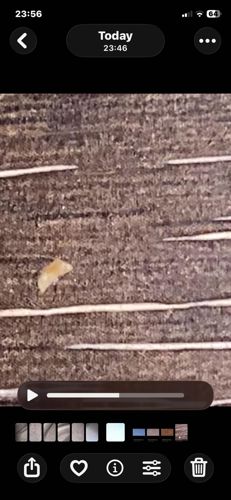
Tapeworm segment (Proglottid)
Scientific Name: Dipylidium caninum or Taenia species
Order & Family: Cyclophyllidea: Dipylidiidae or Taeniidae
Size: 3mm to 12mm (roughly the size of a grain of rice or a cucumber seed)
Natural Habitat
The digestive tracts of mammals (dogs, cats, and occasionally humans); shed segments are typically found near the tail, in bedding, or on carpets.
Diet & Feeding
Absorbs nutrients directly from the host's digested food through its skin while inside the intestine.
Behavior Patterns
Once shed, the segments are initially motile and can crawl short distances. They eventually dry out, resembling yellow sesame seeds, and release thousands of microscopic eggs into the environment.
Risks & Benefits
Risks include intestinal infection (helminthiasis), nutritional deficiencies, and irritation in the host. Benefits include none to the host; they are obligate parasites. In dogs and cats, infection usually occurs from swallowing an infected flea.
Identified on: 1/1/2026