
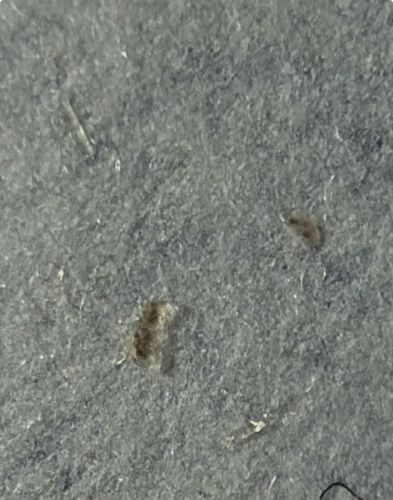
Community identification
Booklouse (Booklice)
Liposcelis spp. (commonly part of the genus Liposcelis)
- Order & Family
- Order: Psocodea (formerly Psocoptera); Family: Liposcelididae
- Size
- Very small, typically 1 mm to 2 mm in length.
Natural Habitat
Found in high-humidity environments indoors, such as basements, bathrooms, or near windows; they frequent dusty areas, shelves with old books, and stored pantry grains.
Diet & Feeding
They feed on mold, fungi, grains, insect fragments, and the starch found in book bindings and wallpaper paste.
Behavior Patterns
They are wingless, soft-bodied insects that move quickly in jerky motions. They do not bite humans or animals. They thrive in damp conditions and reproduce rapidly in humid environments.
Risks & Benefits
Risks: They are considered a nuisance pest rather than a health threat; they do not transmit diseases or bite. Large infestations can contaminate stored food products. Benefits: In nature, they help decompose organic matter.