
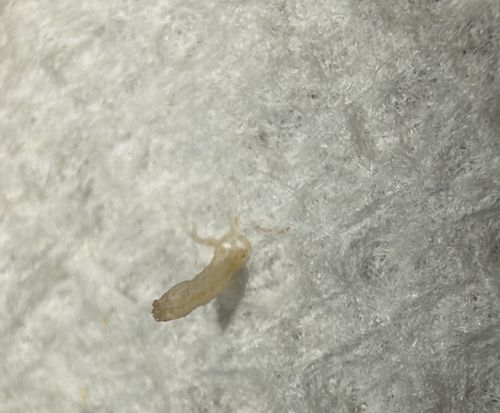
Community identification
Flea Larva
Ctenocephalides felis (most common)
- Order & Family
- Siphonaptera (Order), Pulicidae (Family)
- Size
- 2 to 5 mm (0.08 to 0.2 inches) in length
Natural Habitat
Typically found in dark, shielded areas in homes such as deep carpet fibers, bedding, floor cracks, and upholstery where organic debris accumulates.
Diet & Feeding
Scavengers that feed on organic matter, primarily 'flea dirt' (dried blood excreted by adult fleas), as well as dead skin and other debris.
Behavior Patterns
They exhibit negative phototaxis (avoids light) and actively burrow deep into substrates. They spin silken cocoons to pupate before emerging as adults.
Risks & Benefits
Risks: Indicate an active flea infestation which can cause itchy bites, allergic dermatitis in pets and humans, and transmit tapeworms. Benefits: None in a domestic setting; part of the decomposition cycle in nature.