
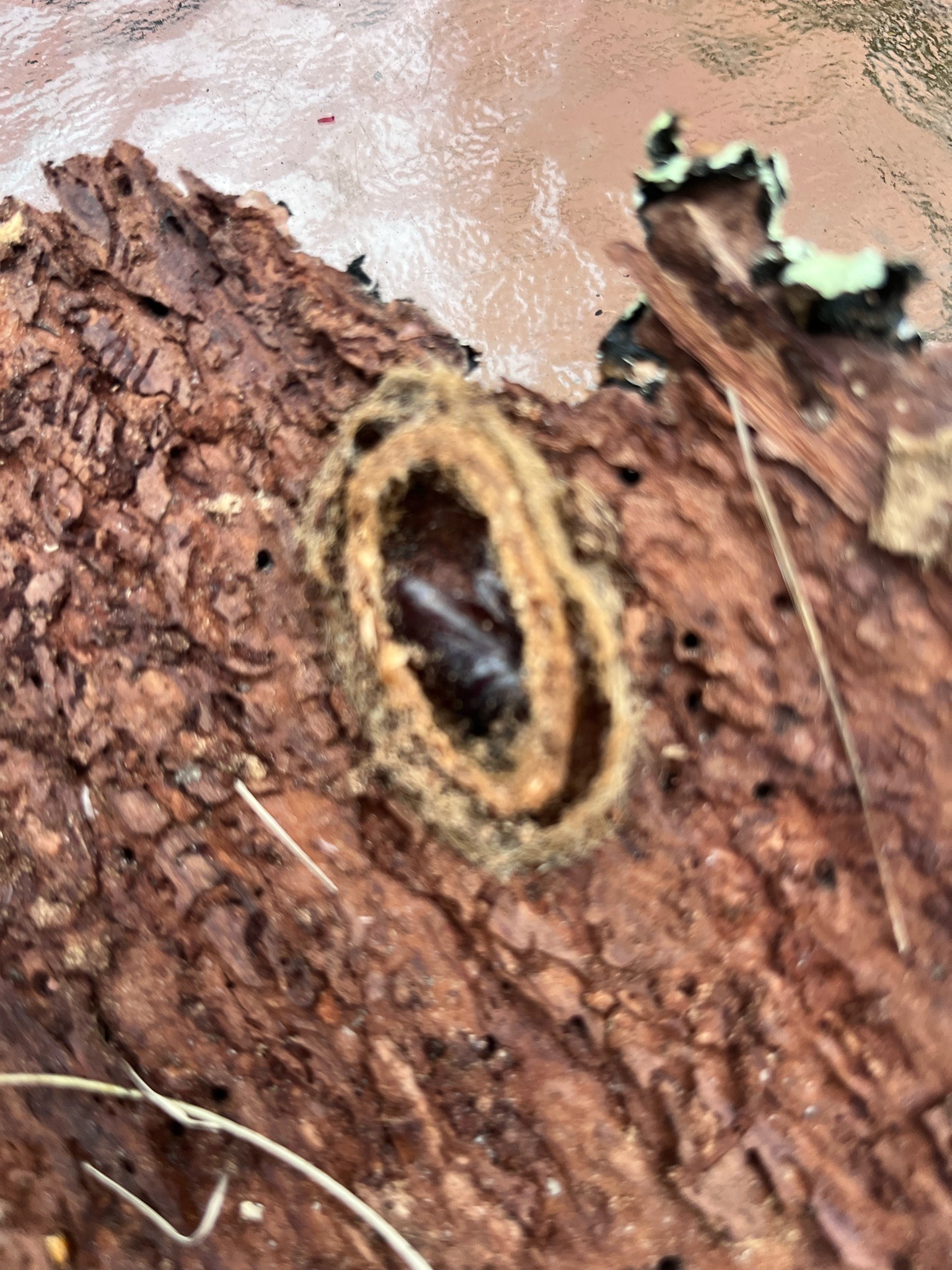
Community identification
Flatheaded Borer (Larva/Pupa stage)
Chrysobothris sp.
- Order & Family
- Coleoptera: Buprestidae (Jewel Beetles)
- Size
- 10mm to 30mm depending on species and developmental stage
Natural Habitat
Underneath the bark of dead or dying trees, or within the wood of various hardwoods and conifers.
Diet & Feeding
Larvae feed on the cambium layer or heartwood of trees, creating winding galleries and tunnels.
Behavior Patterns
The larvae are known for their widened thoracic segment. They remain inside wood throughout their development, emerging as metallic-colored adult beetles after pupating in a small cell like the one pictured.
Risks & Benefits
Generally considered pests because they can damage timber and weaken or kill stressed trees. Benefitially, they assist in the decomposition of dead wood in forest ecosystems.