
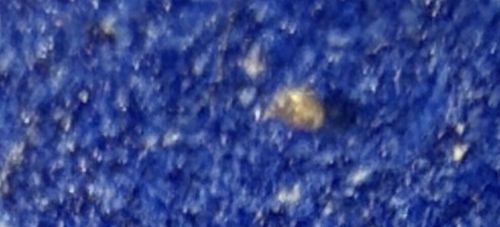
Mold Mite (or possibly a Cheese Mite/Grain Mite)
Tyrophagus putrescentiae (commonly)
- Order & Family
- Order: Sarcoptiformes, Family: Acaridae
- Size
- extremely small, typically 0.3 mm to 0.5 mm (often barely visible to the naked eye as moving dust)
Natural Habitat
They thrive in environments with high humidity and warmth where mold grows easily. Common in kitchens, pantries, bathrooms, on fabrics or upholstery (like the blue surface pictured) that may be damp, and in stored food products.
Diet & Feeding
They primarily feed on mold spores and fungi. However, they are also known to infest food products rich in fat and protein such as cheese, nuts, dried meats, grain, and pet food.
Behavior Patterns
They do not bite humans but are indicators of high moisture or fungal growth. They reproduce rapidly in favorable conditions. You will often see them as 'dust' that seems to be moving slowly across a surface.
Risks & Benefits
Risks: While they don't bite or spread disease directly, their shed skins and feces can be potent allergens for some people, causing coughing or skin irritation (grocer's itch). They can spoil stored food. Benefits: They play a minor role in decomposition in the wild, breaking down fungi.