
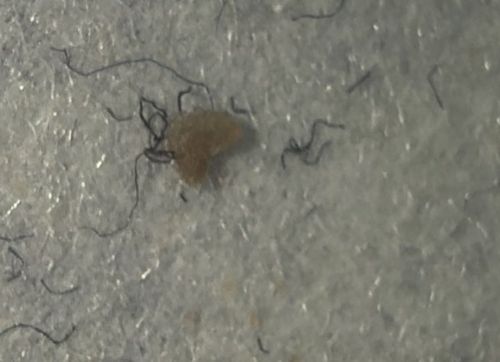
Community identification
Tapeworm Segment (Proglottid)
Dipylidium caninum (most common in pets)
- Order & Family
- Cyclophyllidea, Dipylidiidae
- Size
- Segments resemble grains of rice or cucumber seeds; typically 3-12 mm long
Natural Habitat
Intestinal tract of hosts (dogs, cats); segments are found in feces, bedding, or around the host's anus
Diet & Feeding
Absorbs nutrients directly through its skin from the host's digestive contents; does not have a mouth or digestive tract
Behavior Patterns
Adult worms live in the intestines; mobile segments (proglottids) detach and exit via the anus, often wriggling when fresh and drying to look like sesame seeds
Risks & Benefits
Parasitic risk to pets causing weight loss or scooting behavior; low risk to humans but usually requires ingestion of an infected flea; generally considered a pest requiring veterinary treatment