
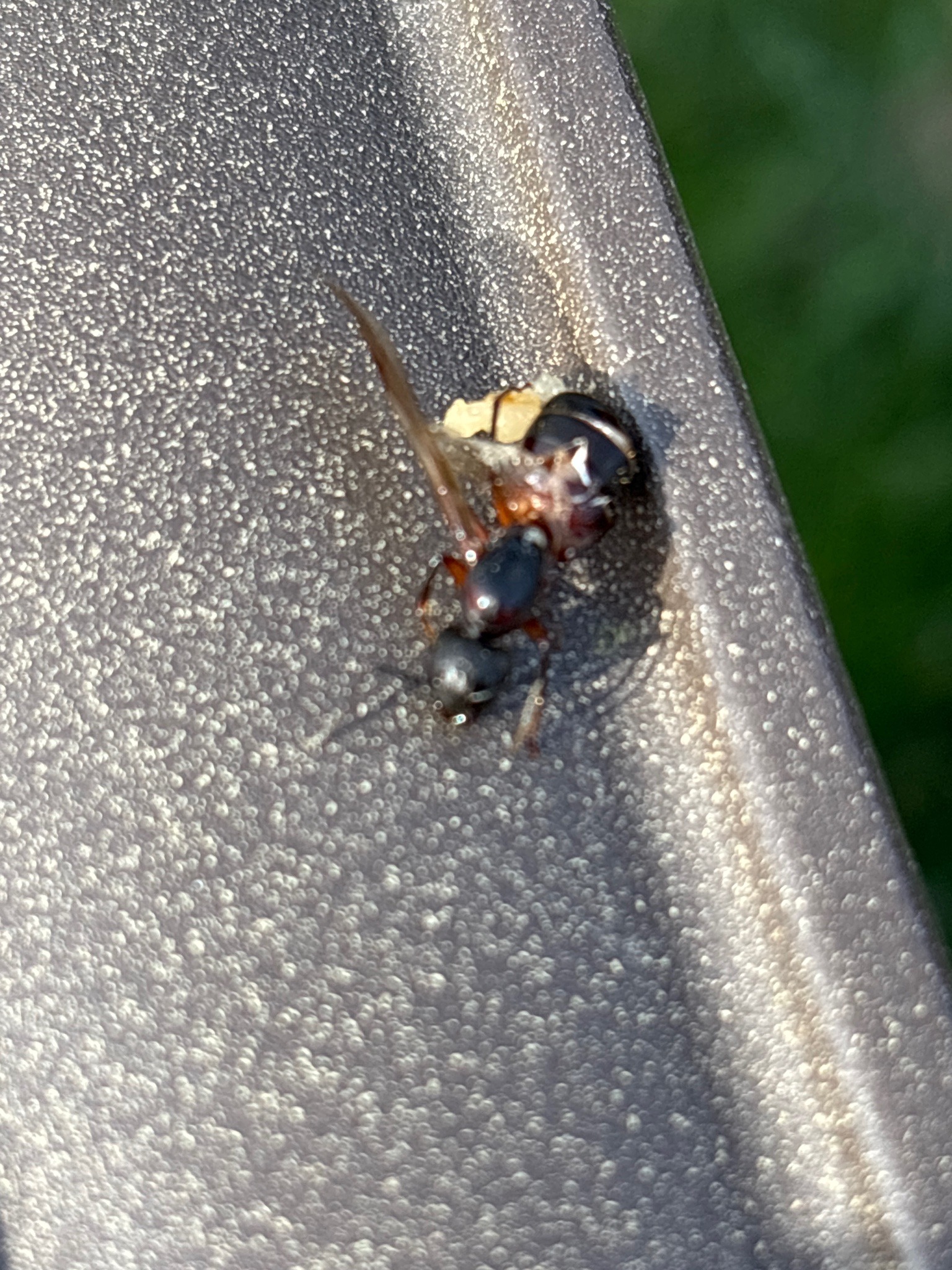
Carpenter Ant (specifically a Winged Queen/Alate)
Camponotus pennsylvanicus (or similar Camponotus species)
- Order & Family
- Order: Hymenoptera; Family: Formicidae
- Size
- Queens range from 13 to 20 mm (approximately 1/2 to 3/4 inch) in length.
Natural Habitat
Found in forests, wooded areas, and suburban environments; they typically nest in moist or decaying wood, such as tree stumps, logs, or structural wood in homes.
Diet & Feeding
Omnivorous; they consume honeydew from aphids, plant juices, and other insects. They do not eat wood, but rather excavate it to create nesting galleries.
Behavior Patterns
The winged individuals (alates) are reproductive members that emerge for 'nuptial flights' to mate and establish new colonies. They are primarily nocturnal or crepuscular foragers.
Risks & Benefits
Risks: Can cause structural damage to buildings if they nest in damp or decayed wood. Benefits: Crucial for forest ecosystems as they aid in the decomposition of dead wood and serve as a food source for birds and other wildlife.