
Community identification
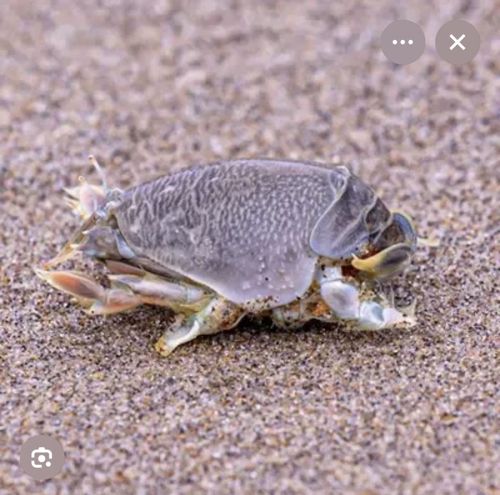
Pacific Mole Crab (also known as Sand Crab or Sea Cicada)
Emerita analoga
- Order & Family
- Order Decapoda, Family Hippidae
- Size
- Males 10–22 mm, Females 20–35 mm in length.
Natural Habitat
Sandy beaches in the intertidal swash zone, ranging from Alaska to Chile in the Pacific Ocean.
Diet & Feeding
Filter feeder; they use their feathery antennae to catch plankton and organic detritus from receding waves.
Behavior Patterns
They live buried upside down in the sand with only their eyes and antennae exposed. They move up and down the beach following the tide and can bury themselves backward very rapidly (in about 1.5 seconds).
Risks & Benefits
Harmless to humans; they are a vital food source for shorebirds, fish, and sea otters. They are often used by fishermen as bait and serve as an important indicator of ecosystem health.