
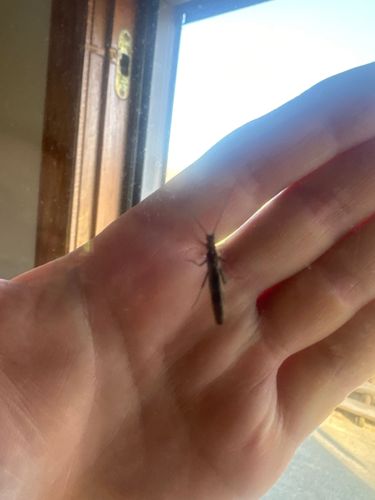
Winter Stonefly
Family Capniidae or Taeniopterygidae
- Order & Family
- Order Plecoptera; Family Capniidae (Small Winter Stoneflies) or Taeniopterygidae (Winter Stoneflies)
- Size
- 5 to 20 mm (0.2 to 0.8 inches) depending on the specific genus.
Natural Habitat
Near clean, cool streams and rivers; adults are often found on snow, bridges, or window screens near water sources in winter.
Diet & Feeding
Nymphs feed on aquatic algae, detritus, or decaying vegetation. Adults of some winter species feed on blue-green algae or lichen, while others do not feed at all during their short adult life.
Behavior Patterns
Notable for being active as adults during the coldest months of the year (late winter to early spring). They can often be seen walking across snow to find mates or crawling on structures near water. They have a hemimetabolous (incomplete) life cycle.
Risks & Benefits
Completely harmless to humans; they do not bite or sting. They are vital indicators of high water quality and serve as an important food source for fish, particularly trout.