
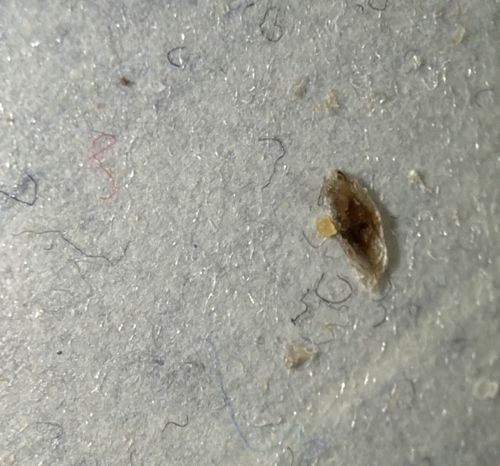
Household Casebearer (often referred to as a Plaster Bagworm or Case-bearing Clothes Moth)
Phereoeca uterella (sometimes confused with Tinea pellionella)
- Order & Family
- Order: Lepidoptera, Family: Tineidae
- Size
- The case is typically 8-13 mm long (approx. 0.3 to 0.5 inches)
Natural Habitat
Commonly found indoors on floors, under rugs, in closets, and on walls. They thrive in climates with high humidity, often seen in garages or under spiderwebs where they scavenge.
Diet & Feeding
Larvae feed on keratin (wool, hair, fur), dead insects, spider silk, lint, and general household detritus. They do not feed on plaster, despite the common nickname 'Plaster Bagworm'.
Behavior Patterns
The larva constructs a flattened, pumpkin-seed-shaped protective case out of silk and available debris (sand, soil, lint). It stays inside this case, dragging it along as it moves. The case has openings at both ends so the larva can turn around without leaving. When ready to pupate, they often attach their case to a vertical surface like a wall.
Risks & Benefits
Generally considered a minor household pest. While they can damage wool fibers, carpets, and clothing (similar to clothes moths), their populations are rarely large enough to cause severe destruction in typical homes. They do not bite or sting humans. They can even provide a minor benefit by cleaning up spiderwebs and dead insects.