
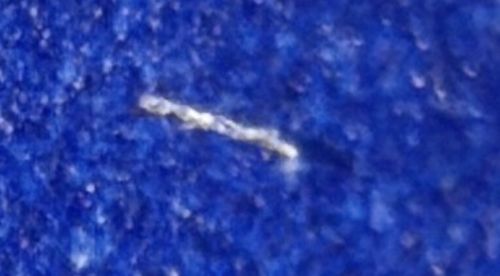
Clothing Moth Larva (or possibly Lint/Debris)
Tineola bisselliella (if a Webbing Clothes Moth)
- Order & Family
- Order: Lepidoptera, Family: Tineidae
- Size
- Typically about 10-12 mm (approx. 0.5 inch) in length when fully grown.
Natural Habitat
Found indoors, often in closets, drawers, or on fabrics. They prefer dark, undisturbed areas where natural fibers like wool, silk, or fur are stored.
Diet & Feeding
The larvae feed on keratin-rich animal fibers such as wool, cashmere, silk, fur, feathers, and occasionally cotton or linen if blended or soiled with food stains.
Behavior Patterns
The larvae spin silken webbing (often tube-like tunnels) as they feed, which they sometimes carry with them or hide inside. They avoid light and are rarely seen flying; usually, only the adult moths are noticed fluttering weakly.
Risks & Benefits
Risks: They are significant household pests that cause damage to clothing, carpets, upholstery, and tapestries by eating holes in fabrics. Benefits: In nature, they help break down animal matter, but inside homes, they offer no benefit and are solely considered pests.