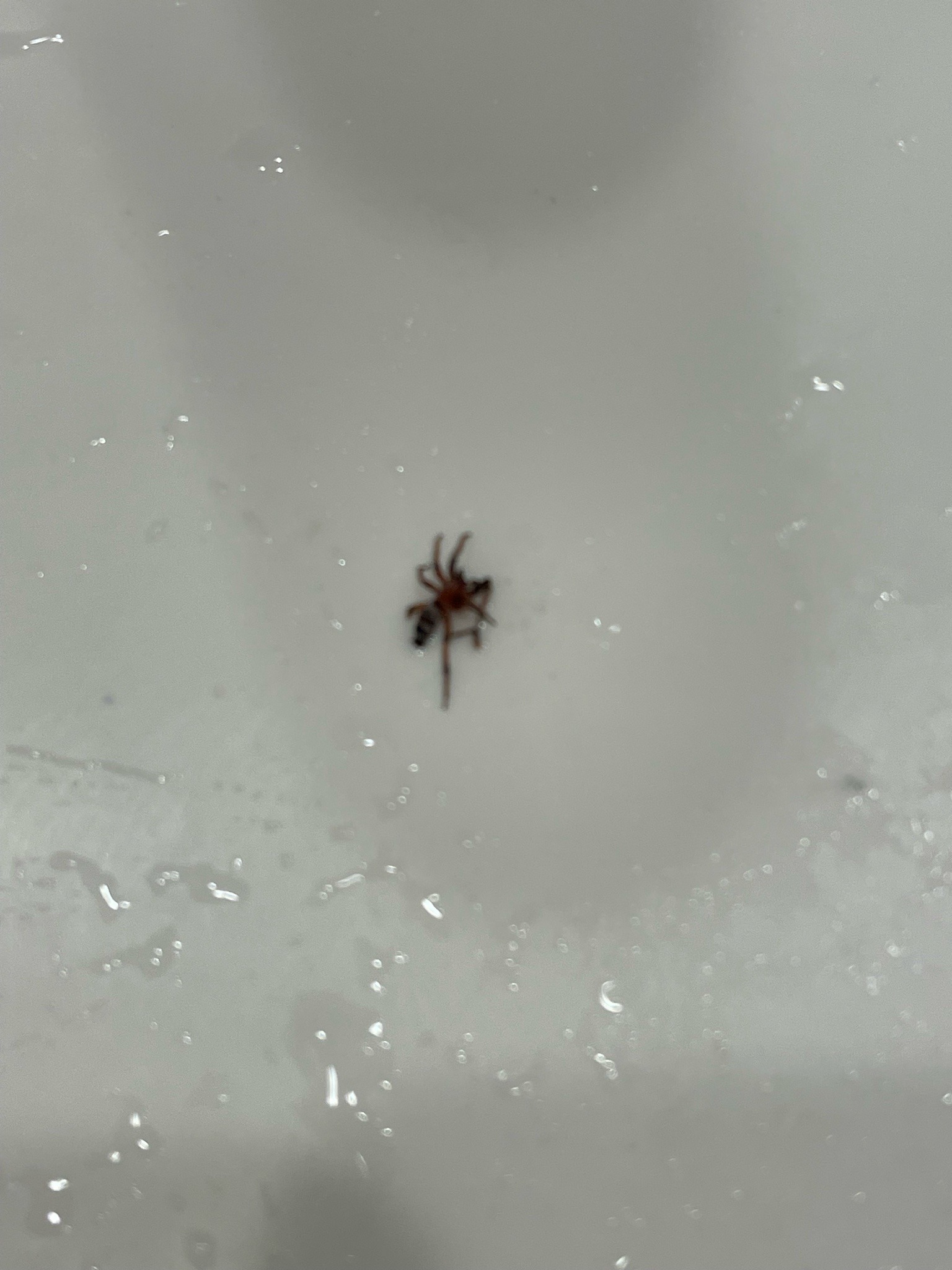
Woodlouse Spider
Scientific Name: Dysdera crocata
Order & Family: Araneae: Dysderidae
Size: Body length 9–15 mm (0.35–0.59 in)
Natural Habitat
Under rocks, logs, leaf litter, and occasionally in dark, damp areas of homes like basements.
Diet & Feeding
Strictly insectivorous; primarily preys on woodlice (pill bugs/roly-polies) using large chelicerae to pierce their shells.
Behavior Patterns
Nocturnal hunters that do not spin webs for catching prey, but instead use silk to create retreat sacs for resting and molting.
Risks & Benefits
Generally harmless to humans though they can bite if handled; the bite may cause localized itchiness. Beneficial to ecosystems by controlling woodlouse populations.
Identified on: 6/16/2026