
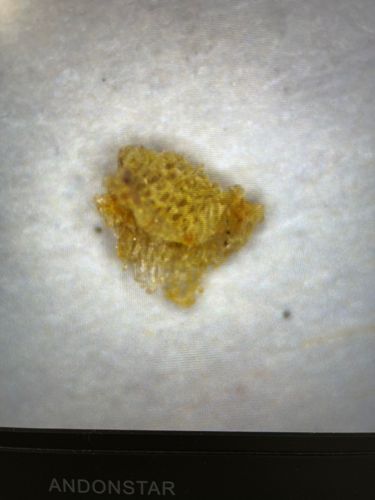
Lace Bug Nymph or Exuviae
Tingidae (family)
- Order & Family
- Hemiptera, Tingidae
- Size
- (Nymph) 1-3 mm, (Adult) 2-5 mm
Natural Habitat
Found on the undersides of leaves of various plants, trees, and shrubs.
Diet & Feeding
Lace bugs are phytophagous, meaning they feed on plant sap. Both nymphs and adults use their piercing-sucking mouthparts to extract sap from plant leaves.
Behavior Patterns
Lace bug nymphs are often found in clusters on the undersides of leaves, especially along the midrib. They are less mobile than adults. The image appears to show either a very young nymph or, more likely, the shed skin (exuviae) of a lace bug nymph. Exuviae are the cast-off exoskeletons left behind after molting. The lace-like pattern is a characteristic feature of this family, even in their shed skins.
Risks & Benefits
Risks: Lace bugs are considered pests in horticulture and agriculture. Their feeding causes stippling (small discoloration spots) on leaves, leading to a bleached appearance. Severe infestations can cause premature leaf drop, reduced plant vigor, and aesthetic damage to ornamental plants. They do not pose risks to humans directly. Benefits: In natural ecosystems, they serve as a food source for some predatory insects, but their impact as a beneficial insect is generally very low.