
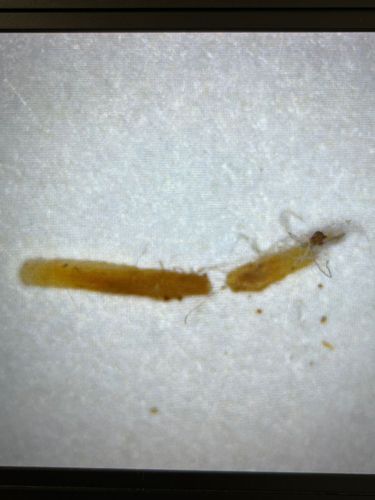
Thrips (likely a larval stage or a wingless adult)
Order Thysanoptera
- Order & Family
- Order: Thysanoptera, Family: Varies (e.g., Thripidae, Phlaeothripidae)
- Size
- Generally 0.5 to 2 mm in length.
Natural Habitat
Found on a wide variety of plants, including flowers, leaves, and fruits, both indoors and outdoors. Some species are also predatory or fungivorous.
Diet & Feeding
Most thrips are phytophagous, feeding on plant sap by piercing and sucking plant cells. Some species are predatory on other small insects and mites, or feed on fungi.
Behavior Patterns
Thrips are known for their short, fringe-like wings (though many species are wingless or have reduced wings, especially larvae). They are often found in tight spaces on plants, such as within buds, flower petals, or along leaf veins. They move quickly and can reproduce rapidly, often without mating (parthenogenesis).
Risks & Benefits
Risks: Many species are significant agricultural and horticultural pests, causing damage to crops and ornamental plants by feeding and transmitting plant viruses. Benefits: Some thrips species are beneficial as predators of other pest insects and mites, helping with biological control.