
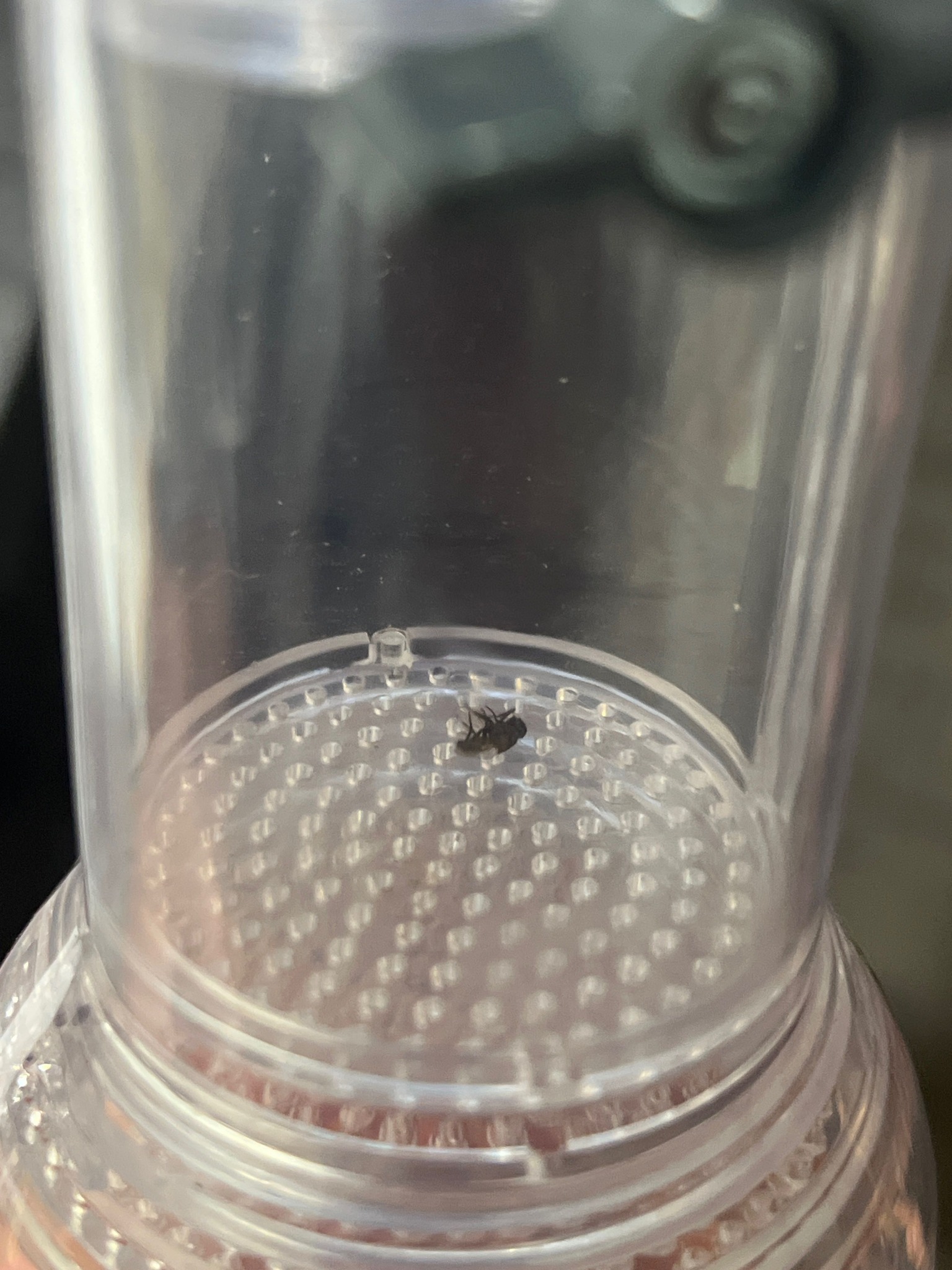
Community identification
Fruit fly (Drosophilid fly)
Drosophila melanogaster
- Order & Family
- Diptera (Order), Drosophilidae (Family)
- Size
- 3 to 4 mm (1/8 inch) in length
Natural Habitat
Found globally, typically in kitchens, grocery stores, and gardens where fermenting or decaying organic matter is present.
Diet & Feeding
Adults and larvae feed on decaying organic materials, particularly ripening or fermenting fruits and vegetables, and the yeast growing on them.
Behavior Patterns
They are active year-round indoors and have a very rapid life cycle; eggs hatch into larvae within 24–30 hours. They are highly attracted to the smell of fermentation.
Risks & Benefits
Considered a nuisance pest that can contaminate food with bacteria. Beneficially, they are one of the most important model organisms in genetics and biological research.