
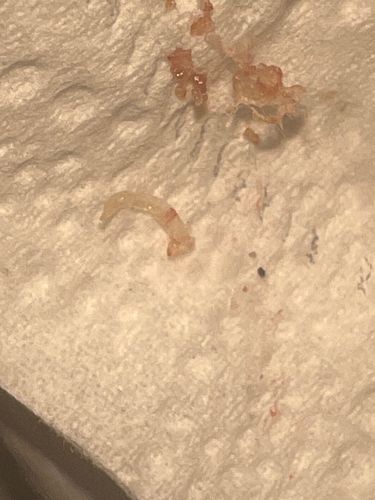
Community identification
Indian meal moth larva
Plodia interpunctella
- Order & Family
- Lepidoptera: Pyralidae
- Size
- Mature larvae are approximately 12 to 13 mm (about 1/2 inch) in length.
Natural Habitat
Worldwide in human dwellings, specifically in kitchens, pantries, and food processing facilities where dry goods are stored.
Diet & Feeding
Feeds on a wide variety of dry stored food products including flour, cereal, cornmeal, crackers, nuts, seeds, dried fruit, chocolate, and dry pet food.
Behavior Patterns
Larvae produce silk webbing as they feed, which often clumps food particles together. When ready to pupate, they often leave the food source and crawl to wall-ceiling junctions or cupboard corners to spin a cocoon.
Risks & Benefits
They are major pantry pests that contaminate food with webbing, fecal pellets, and cast skins. While they do not bite or carry diseases, infested food should be discarded. They offer no notable benefits to the human ecosystem.