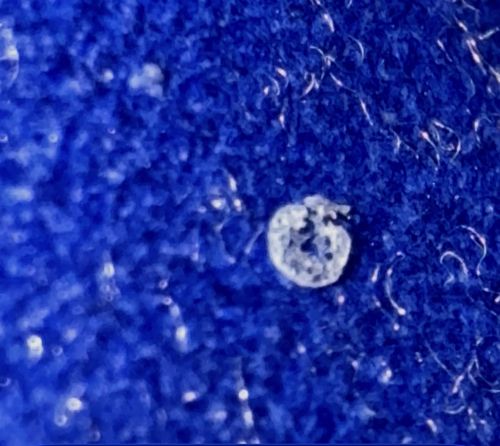
Bird Mite (specifically likely Ornithonyssus spp.) or Dust Mite (Dermatophagoides spp.)
Scientific Name: Ornithonyssus sylviarum / Dermanyssus gallinae (Bird Mites) or Dermatophagoides farinae (Dust Mites)
Order & Family: Order: Mesostigmata, Family: Macronyssidae (Bird Mites) OR Order: Sarcoptiformes, Family: Pyroglyphidae (Dust Mites)
Size: Typically extremely small, ranging from 0.3mm to 1.0mm; often barely visible to the naked eye as moving specks.
Natural Habitat
Bird mites usually live in bird nests (poultry, pigeons, sparrows) but migrate into homes near nests in search of hosts. Dust mites live in textiles like bedding, carpet, and upholstered furniture.
Diet & Feeding
Bird mites are parasitic and feed on the blood of birds (and incidentally humans). Dust mites are saprophytic, feeding on dead human skin scales and organic detritus.
Behavior Patterns
Bird mites are highly active and mobile, often swarming from abandoned nests into buildings. They are most active during the night. Dust mites are less mobile and thrive in humid environments.
Risks & Benefits
Risks: Bird mites can bite humans causing intense itching, skin irritation, and rashes (acariasis) but cannot survive long-term or reproduce on human blood. Dust mites are a major allergen, triggering asthma and allergic rhinitis. Benefits: None significant in a domestic context.
Identified on: 3/4/2026