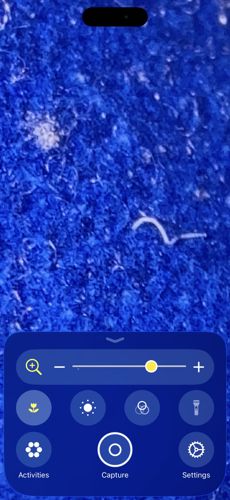
Pinworm
Scientific Name: Enterobius vermicularis
Order & Family: Order: Rhabditida, Family: Oxyuridae
Size: Females are 8-13 mm long; males are smaller, 2-5 mm long.
Natural Habitat
The human large intestine, particularly the cecum, and the perianal skin area.
Diet & Feeding
They feed on intestinal contents, mucosal secretions, and bacteria within the human gut.
Behavior Patterns
Nocturnal migration; female worms travel out of the anus at night to lay thousands of eggs on the surrounding skin, causing intense itching.
Risks & Benefits
Risks include enterobiasis (pinworm infection), itching, insomnia, and secondary bacterial infections from scratching. They provide no known benefits to the host.
Identified on: 12/30/2025