
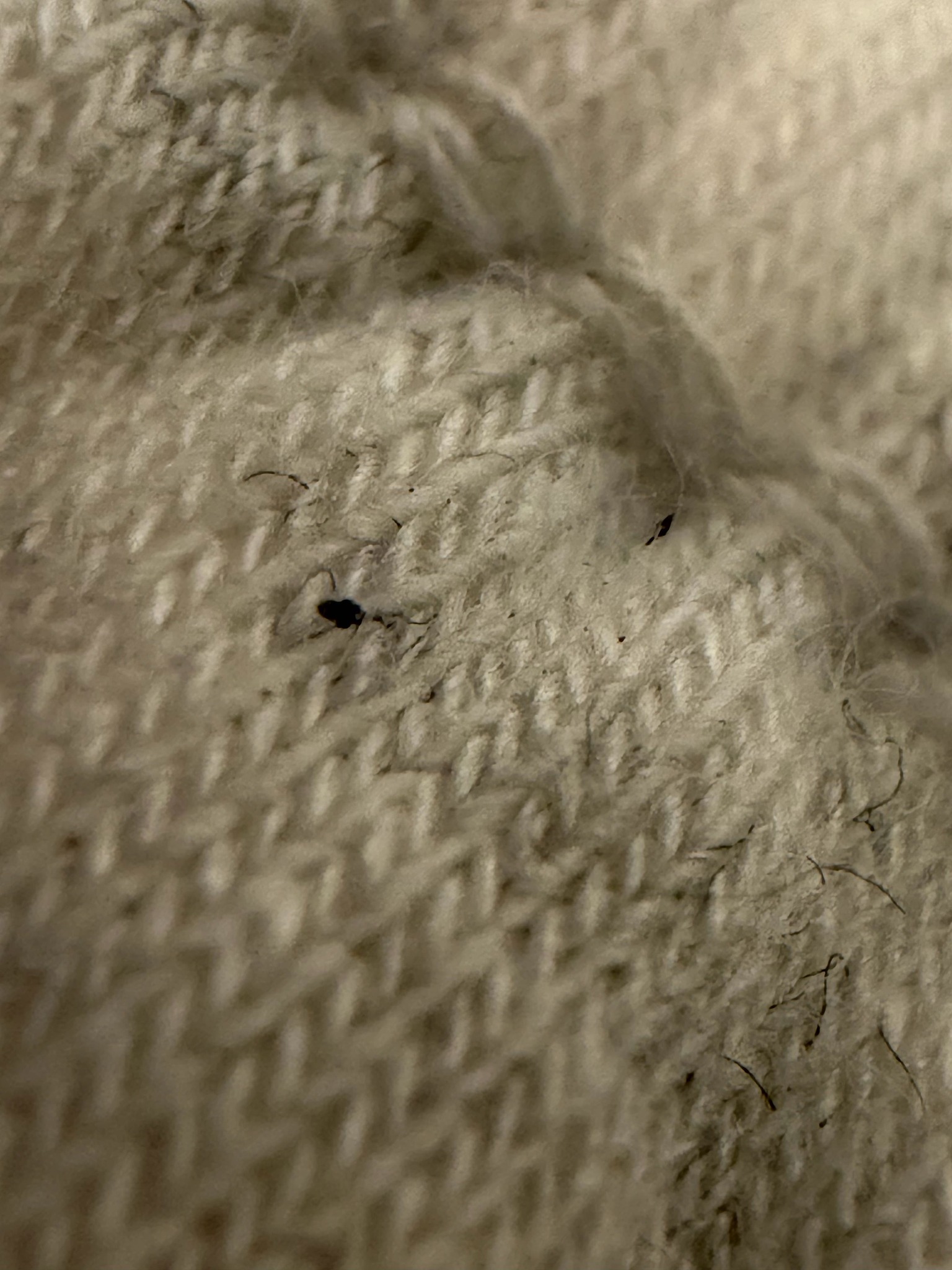
Bird Mite (or Tropical Rat Mite)
Ornithonyssus spp. (likely Ornithonyssus sylviarum or Ornithonyssus bacoti)
- Order & Family
- Order: Mesostigmata; Family: Macronyssidae
- Size
- Extremely small, approx. 0.5 to 1.0 mm (barely visible to the naked eye; often appear as moving specks)
Natural Habitat
Commonly found in bird nests (under eaves, in vents, or attics) or near rodent infestations. They frequently enter homes when their hosts abandon the nest.
Diet & Feeding
Blood of birds or rodents. Although they cannot survive on human blood, they will bite humans search for a host.
Behavior Patterns
These mites are most active in late spring and early summer. They are highly mobile and can travel through wall voids or ventilation to find hosts. They go through a life cycle of egg, larva, nymph, and adult in about 7 to 12 days.
Risks & Benefits
Risks include itchy, red, pinprick-sized bites on humans that can cause dermatitis or secondary infections from scratching. They are not known to transmit diseases to humans. There are no ecological benefits to humans.