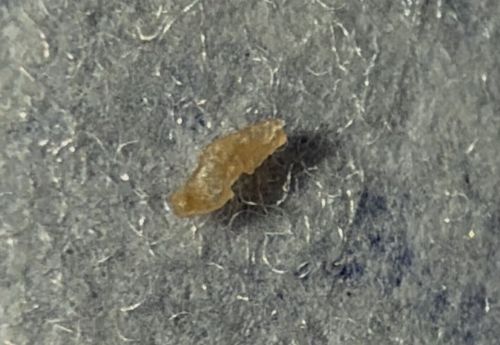
Tapeworm Segment (Proglottid)
Scientific Name: Dipylidium caninum (most common species in pets)
Order & Family: Order: Cyclophyllidea / Family: Dipylidiidae
Size: 3 mm to 12 mm long (roughly the size of a grain of rice or sesame seed)
Natural Habitat
Intestinal tract of dogs and cats (adults); the environment (bedding, carpet, furniture) for shed segments.
Diet & Feeding
Adult tapeworms absorb nutrients from the host's intestinal contents. The segments themselves do not eat but contain egg packets.
Behavior Patterns
Segments act like small, independent sacs of eggs. When fresh, they are capable of expanding and contracting (moving). As they dry out, they shrink, harden, and look like golden sesame seeds.
Risks & Benefits
Risks: Indicates a parasitic infection in a pet (usually transmitted by fleas). While rare, humans (especially children) can be infected if they accidentally ingest an infected flea. Generally considered a nuisance parasite rather than life-threatening.
Identified on: 3/3/2026