
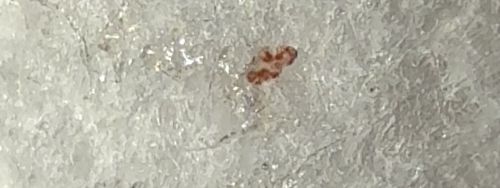
Bird Mite (or possibly Rodent Mite)
Dermanyssus gallinae (Red Poultry Mite) or Ornithonyssus spp. (e.g., Northern Fowl Mite, Tropical Rat Mite)
- Order & Family
- Order: Mesostigmata, Family: Dermanyssidae or Macronyssidae
- Size
- Very small, typically 0.5 mm to 1 mm in length. Visible to the naked eye as moving specks (about the size of a period or poppy seed).
Natural Habitat
Typically found in bird nests (pigeons, chickens, starlings, sparrows) or rodent dens. They migrate into homes when their original hosts leave or die, often entering through windows, vents, or eaves.
Diet & Feeding
Hematophagous (blood-feeders). They feed primarily on the blood of birds or rodents but will bite humans and pets opportunistically if their primary host is absent.
Behavior Patterns
They are nocturnal or active when the host is present. They are extremely mobile and can crawl rapidly over surfaces. They cannot fly or jump. If a bird nest is abandoned, they will migrate in large numbers seeking a new food source (often humans in nearby structures).
Risks & Benefits
Risks: Their bites cause intense itching, skin irritation, and rash (papular urticaria) in humans. While generally not known to transmit diseases to humans as effectively as ticks, they are a significant nuisance pest and can cause severe dermatitis. Benefits: None in a domestic setting; they are parasitic.