
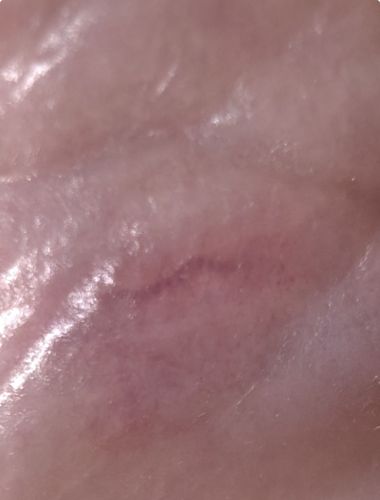
Scabies Mite (Burrow)
Sarcoptes scabiei var. hominis
- Order & Family
- Order: Sarcoptiformes, Family: Sarcoptidae
- Size
- Microscopic (0.3–0.4 mm long for adult females; males are half that size). The visible burrow in the skin is typically 5-10 mm long.
Natural Habitat
Human skin, specifically the epidermis where females burrow to lay eggs. They prefer warm, folded areas like between fingers, wrists, elbows, and armpits.
Diet & Feeding
Feeds on dissolved human tissue, but does not suck blood. They consume skin cells and lymph fluid within the stratum corneum.
Behavior Patterns
The female mite burrows into the upper layer of the skin, creating a serpiginous (wavy) tunnel. She lays eggs along this burrow. The burrows are the diagnostic sign seen in the image (a thin, grayish, slightly raised line). Nocturnal itching is the hallmark symptom due to an allergic reaction to mite feces and proteins.
Risks & Benefits
Risks: Highly contagious, causing intense itching and skin rashes (Scabies). Scratching can lead to secondary bacterial infections like Staphylococcus aureus or Streptococcus (impetigo). There are no ecological benefits; they are strictly parasitic to humans.