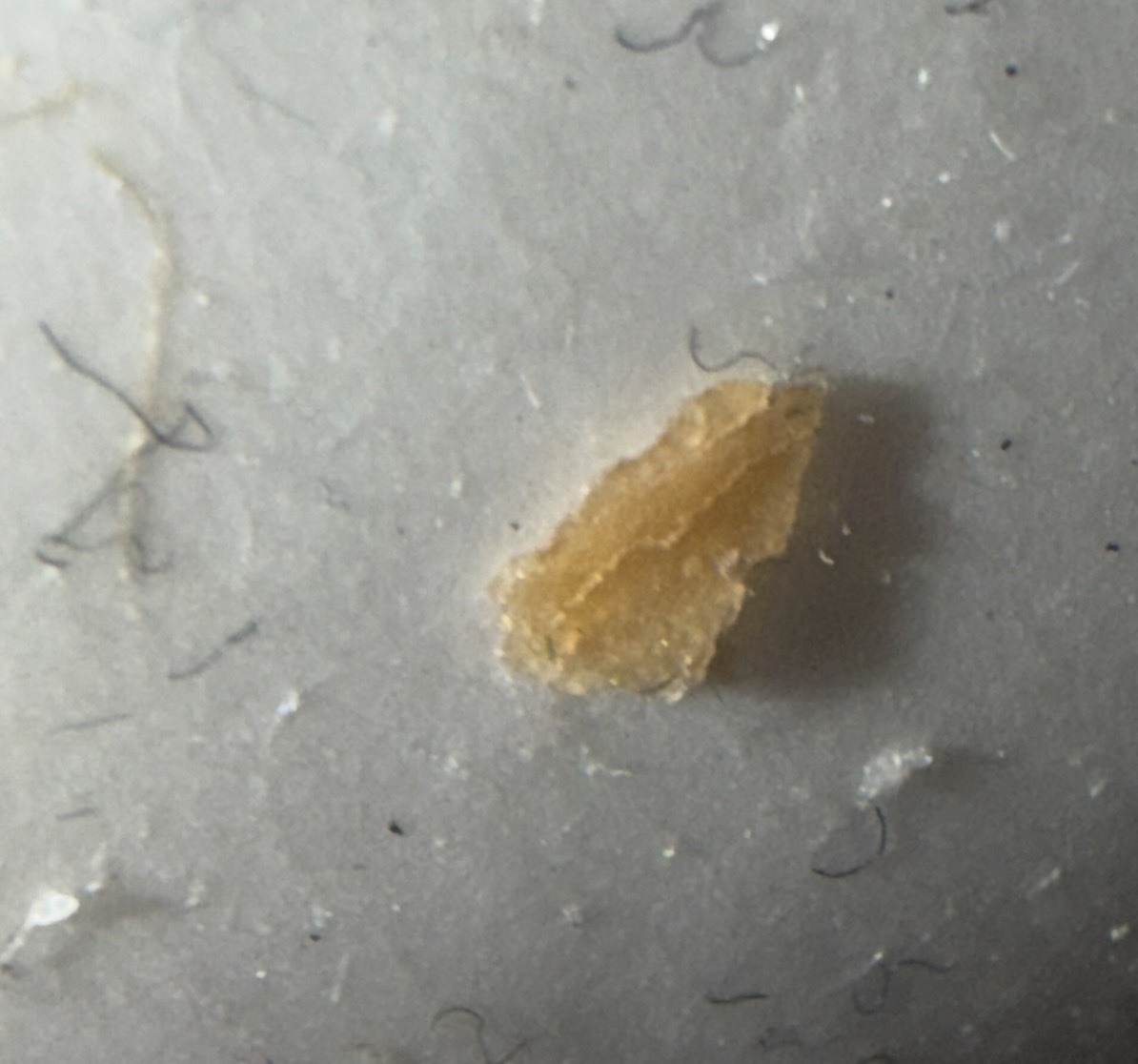
Human Lice Egg (Nit)
Scientific Name: Pediculus humanus capitis
Order & Family: Order: Psocodea (Suborder: Phthiraptera), Family: Pediculidae
Size: Approximately 0.8 mm in length; roughly the size of a knot in a thread.
Natural Habitat
The scalp and hair shafts of human hosts, most commonly found behind the ears and at the nape of the neck.
Diet & Feeding
The adult insect feeds exclusively on human blood; the egg (nit) contains a developing embryo that does not feed until hatching.
Behavior Patterns
Nits are laid by adult females and glued to hair shafts near the scalp for warmth. They hatch in 7-10 days into nymphs, which eventually mature into egg-laying adults.
Risks & Benefits
Risks include intense itching (pruritus), secondary bacterial skin infections from scratching, and social distress. They are not known to spread disease but are highly contagious through head-to-head contact.
Identified on: 7/1/2026