
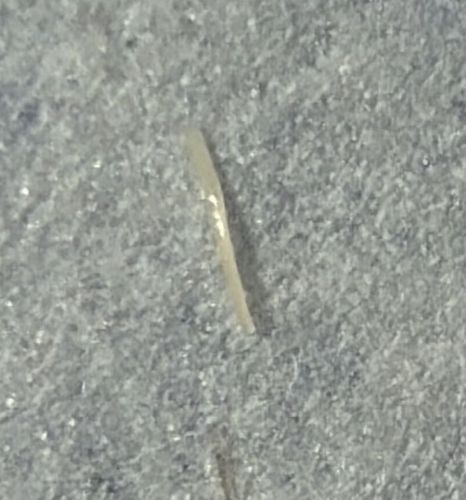
Community identification
Flea Larva
Ctenocephalides felis (Most likely, the Cat Flea)
- Order & Family
- Order: Siphonaptera, Family: Pulicidae
- Size
- Typically 2 to 5 mm (approx. 1/8 to 1/4 inch) in length.
Natural Habitat
Deep inside carpet fibers, cracks in flooring, pet bedding, and dark, humid areas where organic debris accumulates.
Diet & Feeding
Scavengers that feed on organic matter, mainly 'flea dirt' (dried blood feces excreted by adult fleas), dead skin flakes, and other debris.
Behavior Patterns
They are negatively phototactic (avoid light) and will burrow deep into carpets or bedding. They are worm-like and active, eventually spinning a silken cocoon to pupate into adulthood.
Risks & Benefits
Risks: Their presence indicates an active flea infestation in the home. They mature into biting adults that irritate pets and humans, cause allergic dermatitis, and can transmit tapeworms. No household benefits.