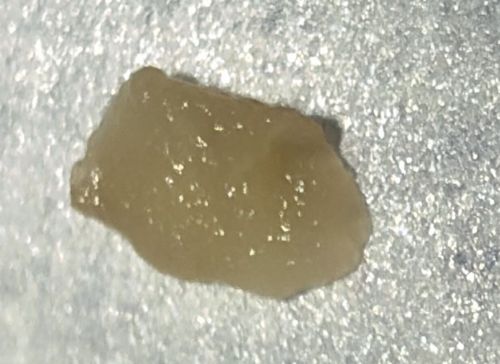
Tapeworm Proglottid (Segment)
Scientific Name: Dipylidium caninum or Taenia species
Order & Family: Order: Cyclophyllidea / Family: Dipylidiidae or Taeniidae
Size: Typically 3mm to 12mm long (resembling a cucumber seed or grain of rice)
Natural Habitat
The intestinal tracts of mammals (usually dogs or cats); passed into the environment via feces or by crawling out of the anus.
Diet & Feeding
Absorbs pre-digested nutrients directly through its skin (tegument) while living inside the host's intestine.
Behavior Patterns
These segments detach from the main tapeworm inside the host and are expelled. When fresh (as pictured), they can slowly contract and expand, moving independently. Once dried, they look like hard, yellow rice grains.
Risks & Benefits
Risk: They indicate an active tapeworm infection in a pet (or rarely a human). They contain egg packets that can infect intermediate hosts (like fleas). While generally not immediately dangerous to handle, hygiene is crucial to prevent accidental ingestion of eggs.
Identified on: 3/8/2026