
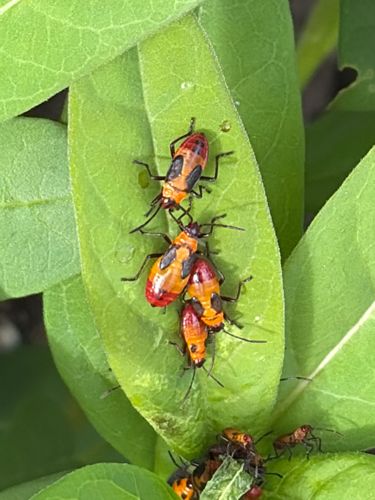
Large Milkweed Bug (Nymphs)
Oncopeltus fasciatus
- Order & Family
- Order Hemiptera; Family Lygaeidae
- Size
- Nymphs grow from 1 mm to 10 mm; adults reach 10–18 mm.
Natural Habitat
Found in gardens, meadows, and fields where milkweed plants (Asclepias species) are present throughout North America.
Diet & Feeding
They primarily feed on the seeds, leaves, and stems of milkweed plants using piercing-sucking mouthparts to extract juices.
Behavior Patterns
They are gregarious as nymphs, often huddling together for protection. They undergo incomplete metamorphosis (hemimetabolous), passing through five nymphal stages (instars) before becoming winged adults. They migrate south in the winter in colder climates.
Risks & Benefits
They pose no risk to humans as they do not bite or sting. They are minor garden pests that can damage milkweed seeds. They benefit the ecosystem by serving as a food source for specialized predators and by concentrating toxic chemicals from milkweed, which makes them unpalatable to most birds (aposematism).