
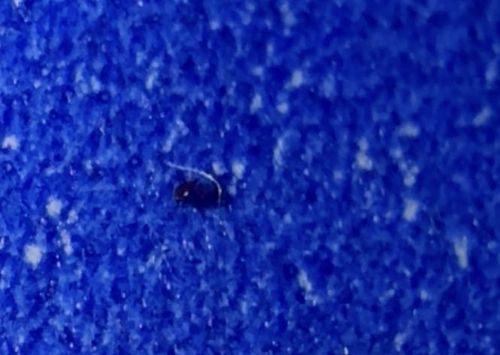
Bird Mite (specifically likely the Tropical Fowl Mite or Northern Fowl Mite)
Ornithonyssus spp. (e.g., Ornithonyssus bursa or Ornithonyssus sylviarum)
- Order & Family
- Order: Mesostigmata, Family: Macronyssidae
- Size
- Minute size, barely visible to the naked eye. Approximately 0.7 mm to 1 mm in length.
Natural Habitat
Typically found in bird nests (wild or domestic), chicken coops, and aviaries. They may migrate into homes through cracks, windows, or vents during late spring or early summer when young birds leave the nest.
Diet & Feeding
Hematophagous (blood-feeding); they primarily feed on the blood of birds, though they will test-bite humans and other mammals if their primary hosts are unavailable.
Behavior Patterns
These mites are nocturnal or active when hosts are present. They reproduce rapidly, with a life cycle from egg to adult taking only 5-7 days under favorable conditions. They are known for 'swarming' behaviors when a host dies or leaves the nest, leading them to wander into human dwellings.
Risks & Benefits
Risks: Their bites on humans cause intense itching, irritation, and rashes (gamasoidosis), and can feel like a 'crawling' sensation, though they cannot survive on human blood. They can weaken or kill young birds through blood loss. Benefits: None significant to humans or the general ecosystem other than potential prey for other micro-predators.