Tapeworm Segment (Proglottid)
Scientific Name: Dipylidium caninum (most common dog/cat tapeworm)
Order & Family: Order: Cyclophyllidea, Family: Dipylidiidae
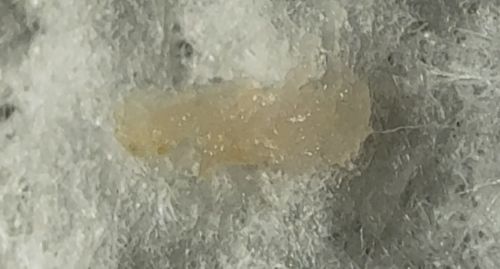
Size: Segments are typically rice-grain sized or cucumber-seed sized, roughly 3mm to 12mm long when expelled.
Natural Habitat
Intestines of host animals (dogs, cats, occasionally humans). The segments are found in feces, on the animal's fur around the anus, or on bedding/furniture where the animal sleeps.
Diet & Feeding
The adult tapeworm absorbs nutrients directly through its skin from the host's digested food within the intestine. It has no digestive system of its own.
Behavior Patterns
Adult tapeworms live in the intestine. They shed segments (proglottids) containing eggs. These segments are mobile when fresh and can be seen expanding and contracting. As they dry out (like the one in the image might be starting to), they look like grains of rice or sesame seeds.
Risks & Benefits
Risks: Can cause weight loss, scooting (dragging rear on ground), and mild gastrointestinal upset in pets. While rarely dangerous to healthy adult humans, children can become infected if they accidentally ingest an infected flea (the intermediate host). Benefits: None; they are parasites.
Identified on: 2/13/2026