
Community identification
Pear Slug (Pear Sawfly Larva)
Caliroa cerasi
- Order & Family
- Order: Hymenoptera, Family: Tenthredinidae
- Size
- Typically 10 mm to 12 mm (approx. 0.5 inches) in length.
Natural Habitat
Found on the leaves of deciduous trees, commonly pear, cherry, plum, and hawthorn trees in gardens and orchards.
Diet & Feeding
Herbivorous; they feed on the upper surface of leaves, eating the tissue between veins (skeletonizing the foliage).
Behavior Patterns
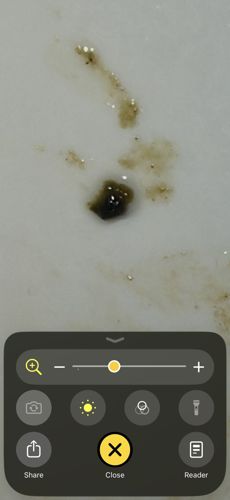
The larvae secrete a slime that gives them a distinct olive-green to black, wet, slug-like appearance. This disguise resembles bird droppings to deter predators. They are slow-moving and typically feed in groups.
Risks & Benefits
They are a garden pest that can cause significant cosmetic damage and defoliation to fruit trees, potentially stressing the tree and reducing harvest. They are harmless to humans and do not bite or sting, though they are slimy to the touch.