
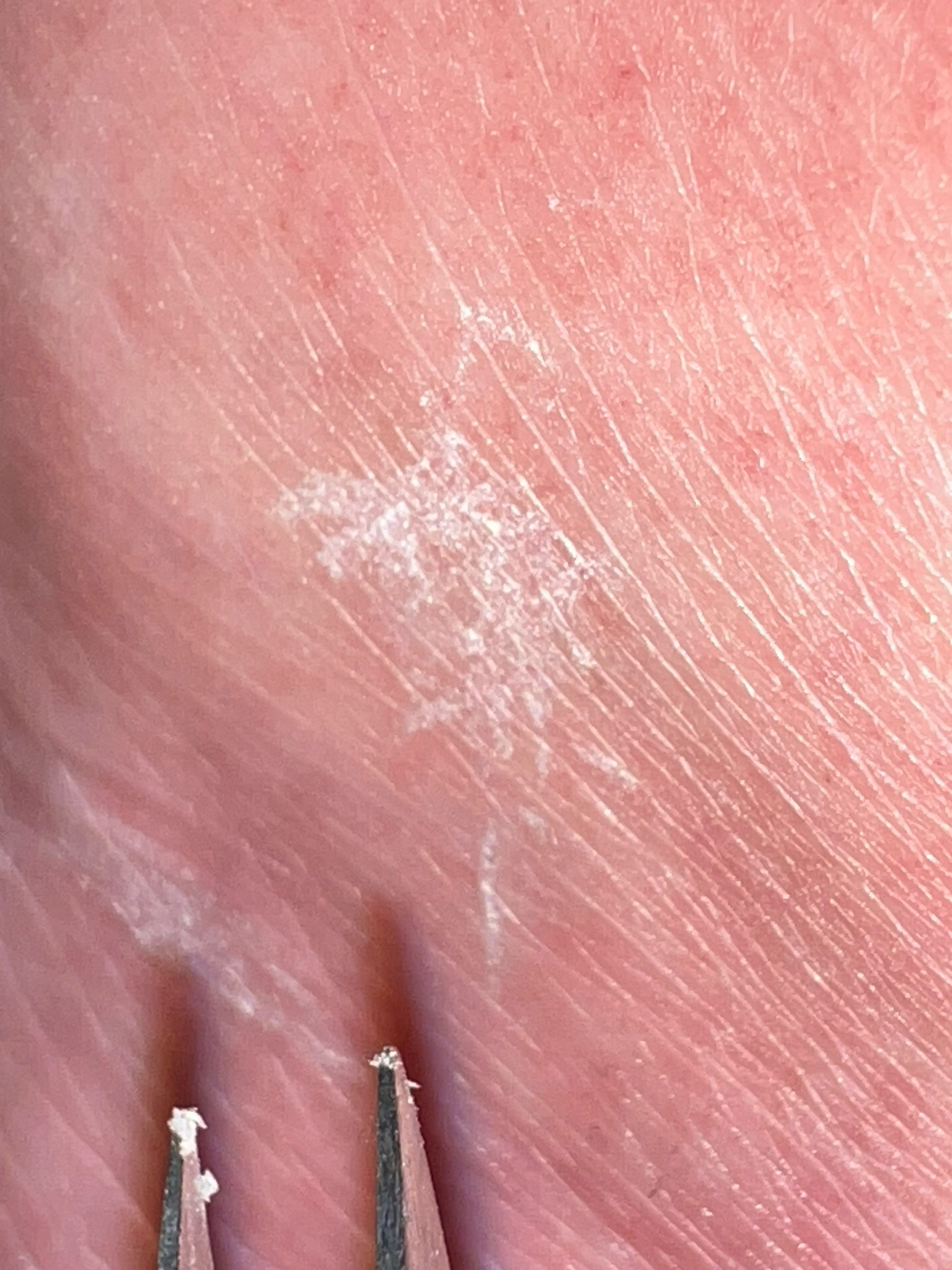
Community identification
Human Scabies Mite
Sarcoptes scabiei var. hominis
- Order & Family
- Order: Sarcoptiformes, Family: Sarcoptidae
- Size
- Microscopic; females are approximately 0.30 to 0.45 mm long, while males are about half that size.
Natural Habitat
The upper layer of human skin (epidermis); specifically the stratum corneum where they burrow.
Diet & Feeding
The mites feed on skin cells and extracellular fluids found within the burrows they create in the human epidermis.
Behavior Patterns
Adult females burrow into the skin to lay 2-3 eggs daily. Mites are most active at night. The life cycle from egg to adult takes approximately 10-15 days.
Risks & Benefits
Risks include intense itching (scabies), secondary skin infections from scratching (like impetigo), and the potential for outbreaks in crowded environments. There are no known benefits.