
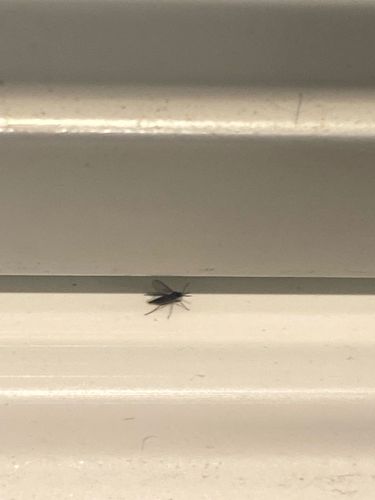
Community identification
Fungus Gnat
Families Sciaridae and Mycetophilidae
- Order & Family
- Order Diptera, Families Sciaridae or Mycetophilidae
- Size
- 1/16 to 1/8 inch (2–5 mm) in length
Natural Habitat
Damp environments with decaying organic matter, such as houseplant soil, greenhouses, and moist woodlands.
Diet & Feeding
Larvae primarily feed on fungi, algae, and decaying plant matter in the soil; occasionally, they will feed on plant roots. Adults typically do not feed or may consume water and nectar.
Behavior Patterns
Adults are weak flyers and are often seen scurrying across surfaces or flying erratically near lights or moist soil. They have a short life cycle of about 3-4 weeks, transitioning from egg to larva to pupa to adult.
Risks & Benefits
Generally harmless to humans as they do not bite or sting. However, in large numbers, the larvae can damage the root systems of houseplants. They are mostly considered a nuisance pest in indoor environments.