
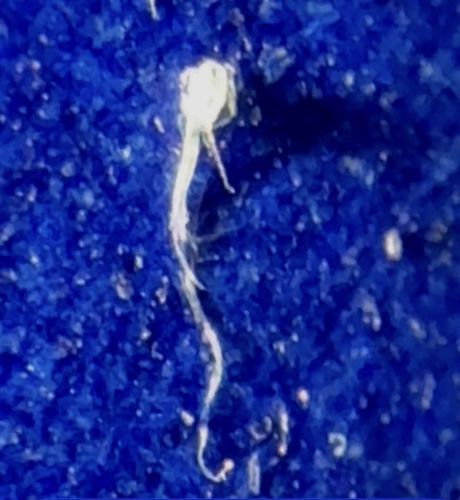
Rat-tailed Maggot (Larva of a Drone Fly)
Eristalis tenax (larval stage)
- Order & Family
- Order: Diptera (Flies), Family: Syrphidae (Hoverflies)
- Size
- Body is typically 20mm (0.75 in) long, but the telescoping breathing tube (tail) can extend up to 150mm (6 in).
Natural Habitat
Found in stagnant, oxygen-depleted water rich in organic decaying matter, such as sewage lagoons, cesspools, liquid manure pits, and water-filled containers with rotting leaves.
Diet & Feeding
They feed on decaying organic matter and bacteria found in polluted water, acting as natural filter feeders.
Behavior Patterns
The most distinctive behavior is the use of their long, snorkel-like tail to breathe atmospheric air while submerged in low-oxygen water. They eventually leave the water to pupate in drier soil.
Risks & Benefits
Generally harmless to humans; they do not bite or sting. Benefit: They help decompose organic waste in polluted environments. Adult drone flies are excellent pollinators resembling honey bees. Risk: Rarely, accidental ingestion can cause intestinal myiasis.