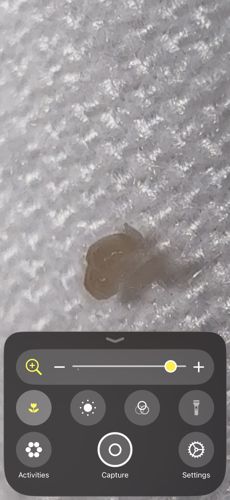
Pinworm
Scientific Name: Enterobius vermicularis
Order & Family: Order: Oxyurida, Family: Oxyuridae
Size: Females: 8–13 mm long; Males: 2–5 mm long
Natural Habitat
Human gastrointestinal tract (specifically the cecum, appendix, and ascending colon; migrating to the perianal skin to lay eggs)
Diet & Feeding
Intestinal contents, blood, and mucosal secretions of the human host
Behavior Patterns
Females migrate to the perianal area at night to deposit thousands of eggs, causing intense itching. Eggs are infectious within hours and are spread via fecal-oral transmission or contaminated surfaces.
Risks & Benefits
Risk: Causes enterobiasis, characterized by perianal itching, sleep disruption, and potential secondary bacterial infections from scratching. No ecological benefits; exclusively a human parasite.
Identified on: 1/8/2026