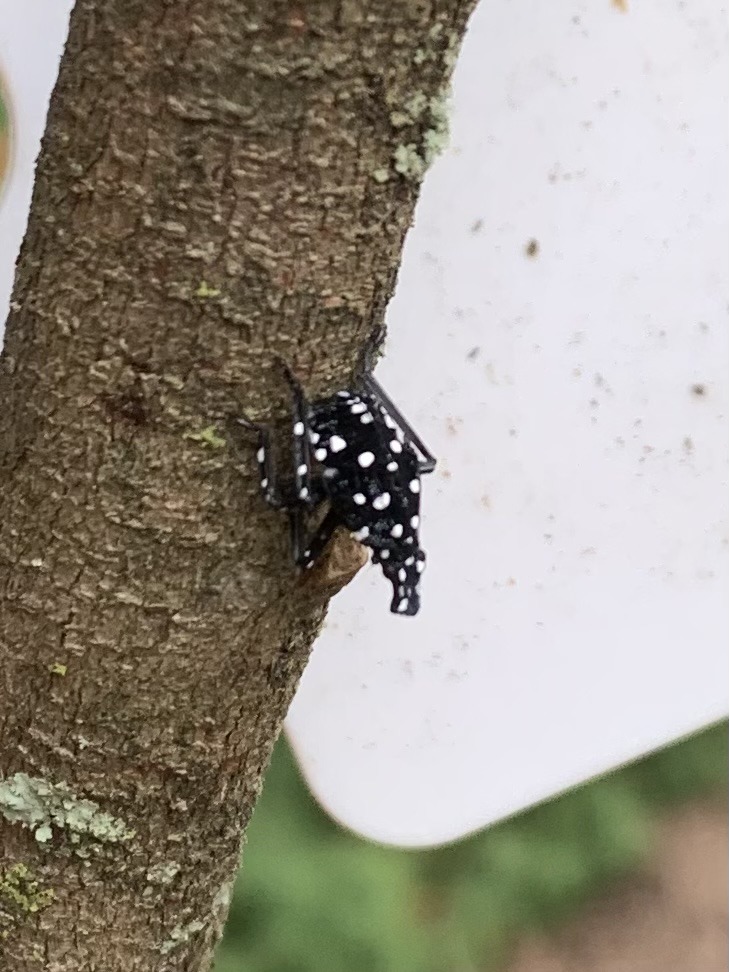
Spotted Lanternfly (Early Stage Nymph)
Scientific Name: Lycorma delicatula
Order & Family: Order Hemiptera; Family Fulgoridae
Size: 1/8 to 1/4 inch (first through third instars)
Natural Habitat
Found on a wide variety of plants, especially the invasive Tree of Heaven (Ailanthus altissima), as well as fruit trees, grapevines, and hardwoods in urban and agricultural areas.
Diet & Feeding
Piercing-sucking mouthparts used to feed on phloem sap from over 70 species of plants, including grapes, hops, apples, and various maple and walnut trees.
Behavior Patterns
The insect undergoes four nymphal stages (instars) before reaching adulthood. The first three stages are black with white spots, while the fourth is red. They are strong jumpers and often move up and down the trunks of host trees daily.
Risks & Benefits
Highly invasive and economically damaging pest. As they feed, they excrete 'honeydew,' which promotes the growth of black sooty mold that kills plants. They have no significant ecological benefits in their invasive range and threaten the timber and agricultural industries.
Identified on: 6/8/2026